3 min read
Your health has layers. Bring them together.
A personal record that gives sleep, movement, meals, and everyday context a place together.
The Strata field guide
Practical ways to record your days, review your history, and understand what the numbers can—and cannot—tell you.
guides for the records
that make up your life.
Start here · Product story
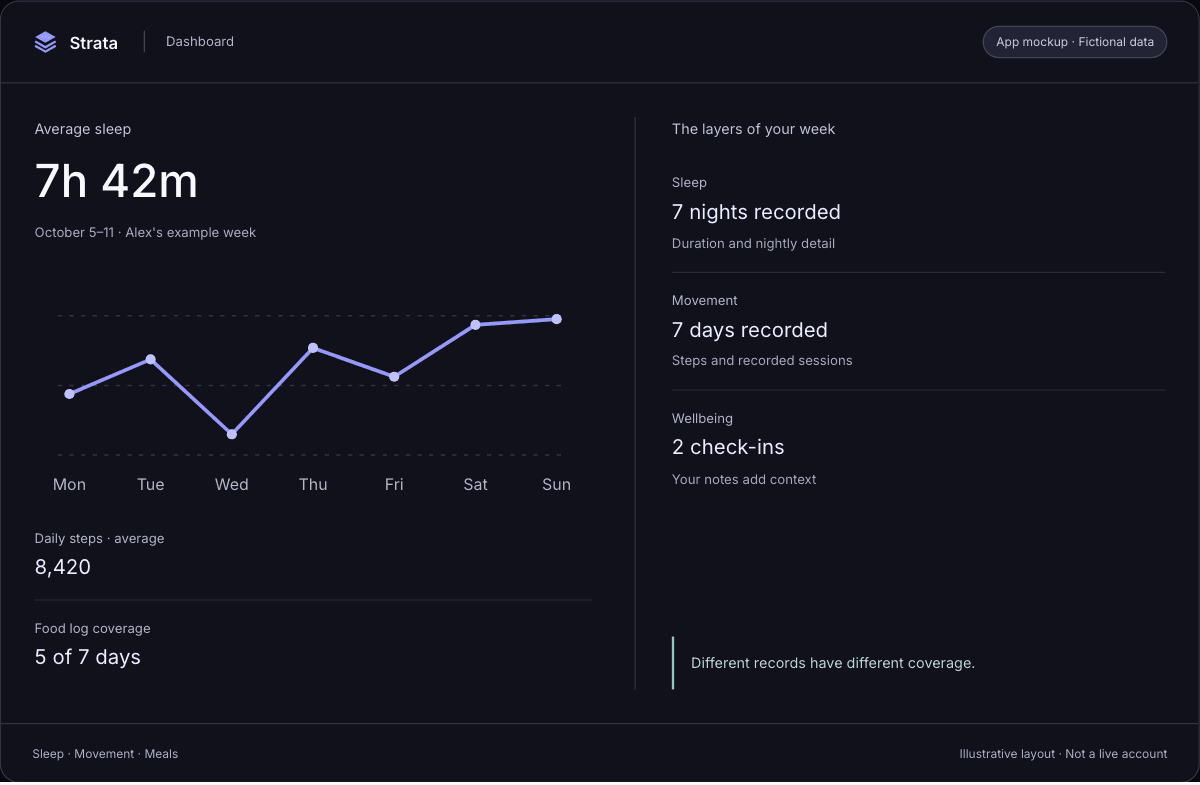
A personal record that gives sleep, movement, meals, and everyday context a place together.
Read the storyAverage sleep
7h 42m
October 5–11 · Alex's example week
The layers of your week
Duration and nightly detail
Steps and recorded sessions
Your notes add context
Find your bearings and build a routine.
3 min read
A personal record that gives sleep, movement, meals, and everyday context a place together.
3 min read
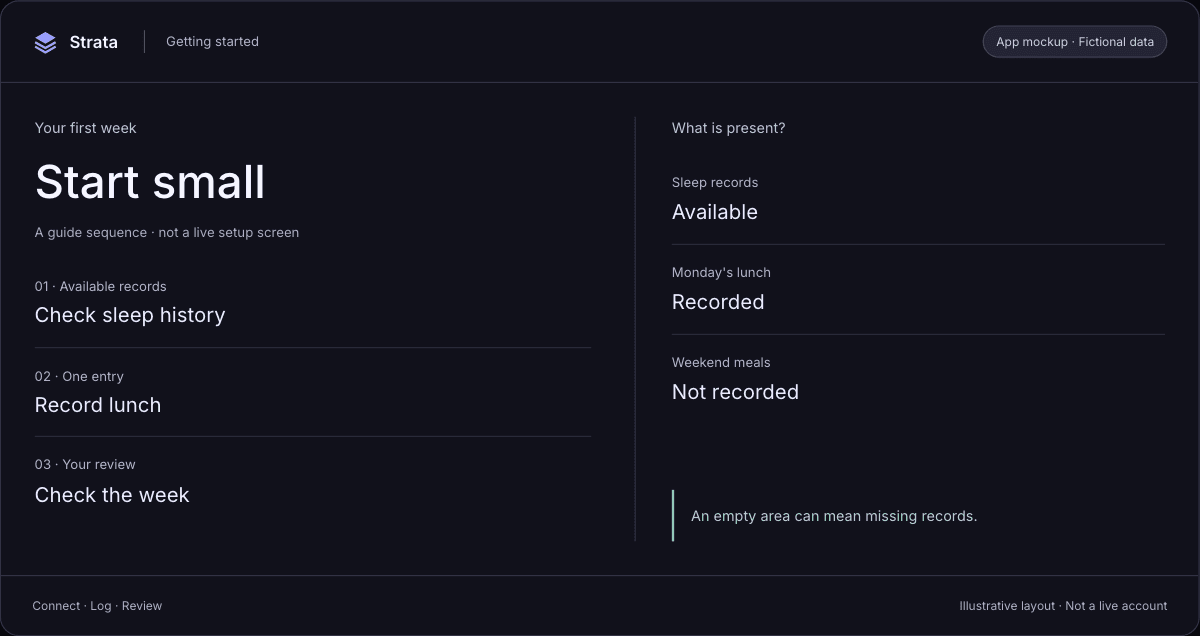
Start with available records, add a little context, and make your first review manageable.
3 min read
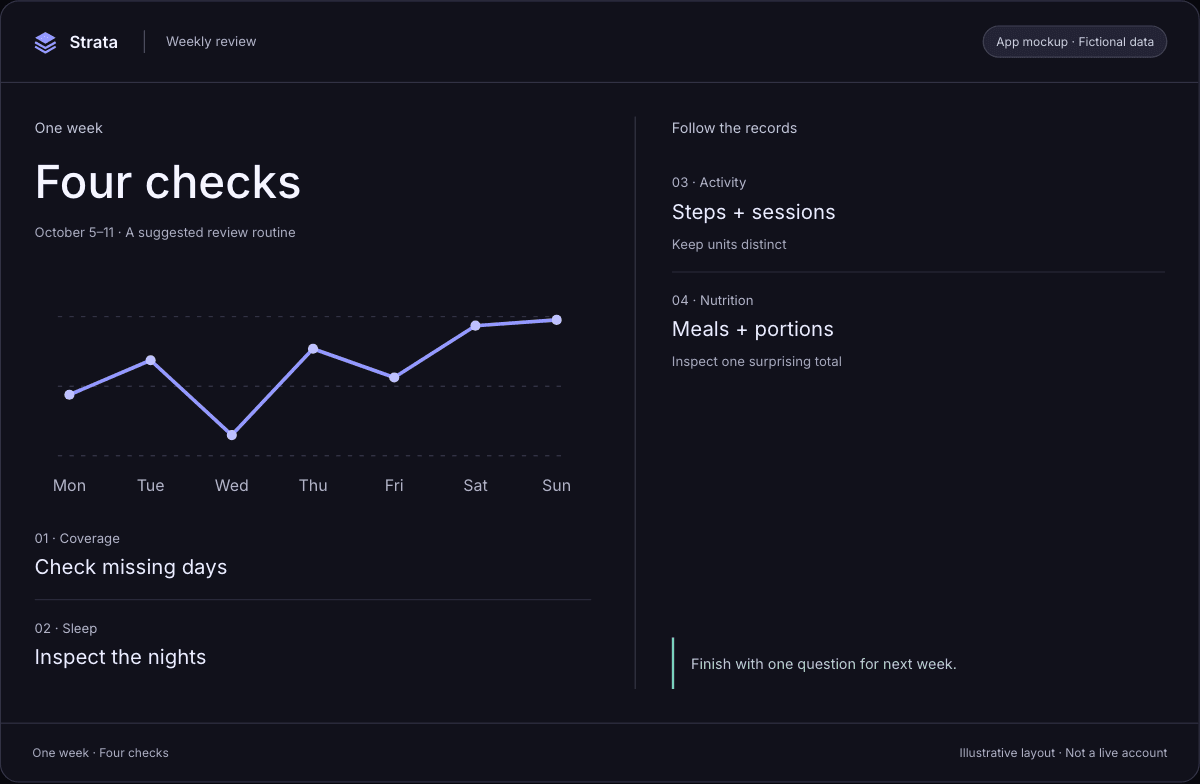
A simple sequence for reviewing recorded sleep, activity, nutrition, and context without chasing every number.
3 min read
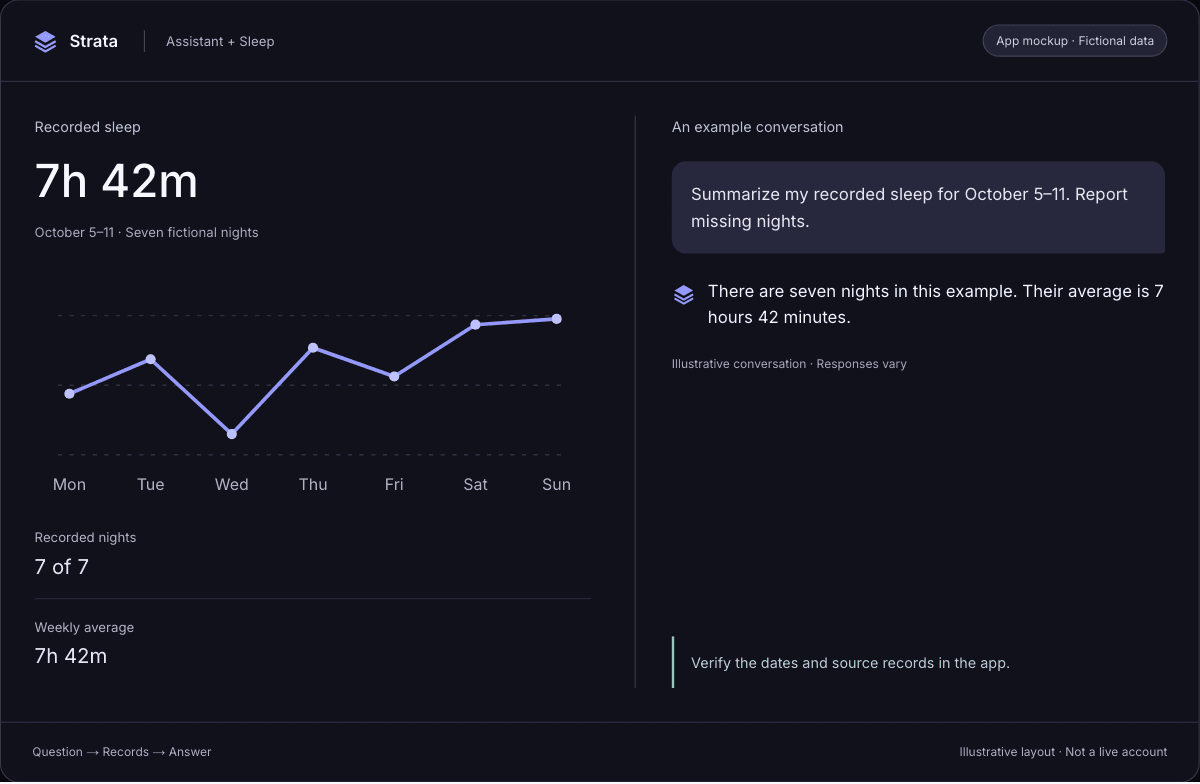
Useful questions that turn recorded data into summaries you can check in Strata.
3 min read
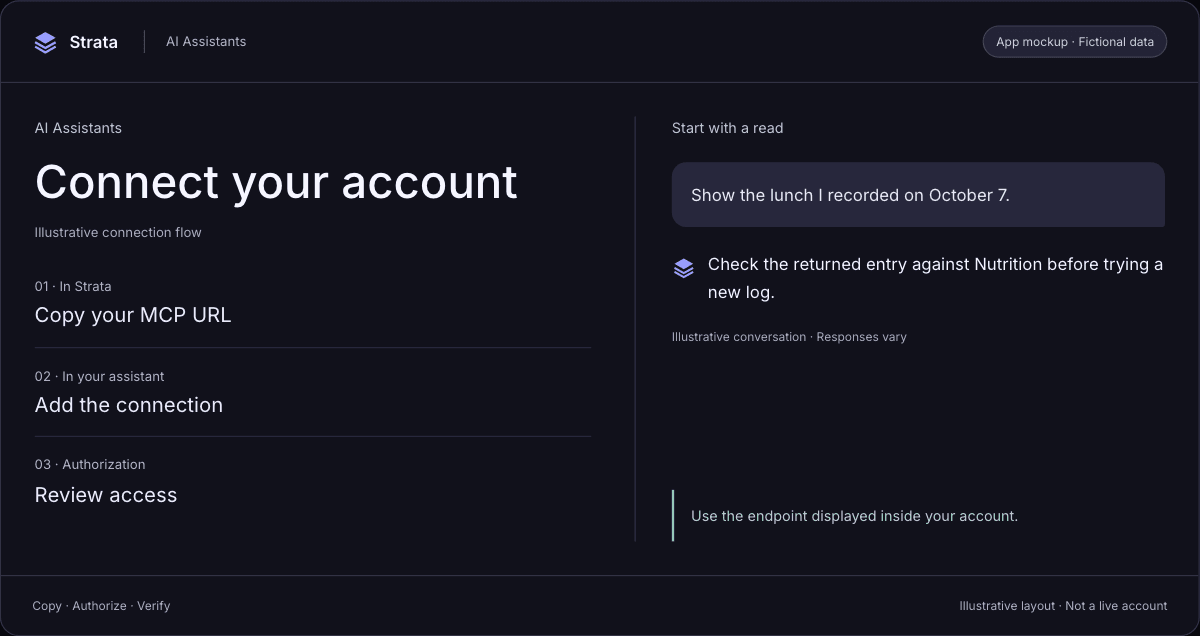
Understand the connection, begin with a read-only question, and verify the result in the app.
5 min read
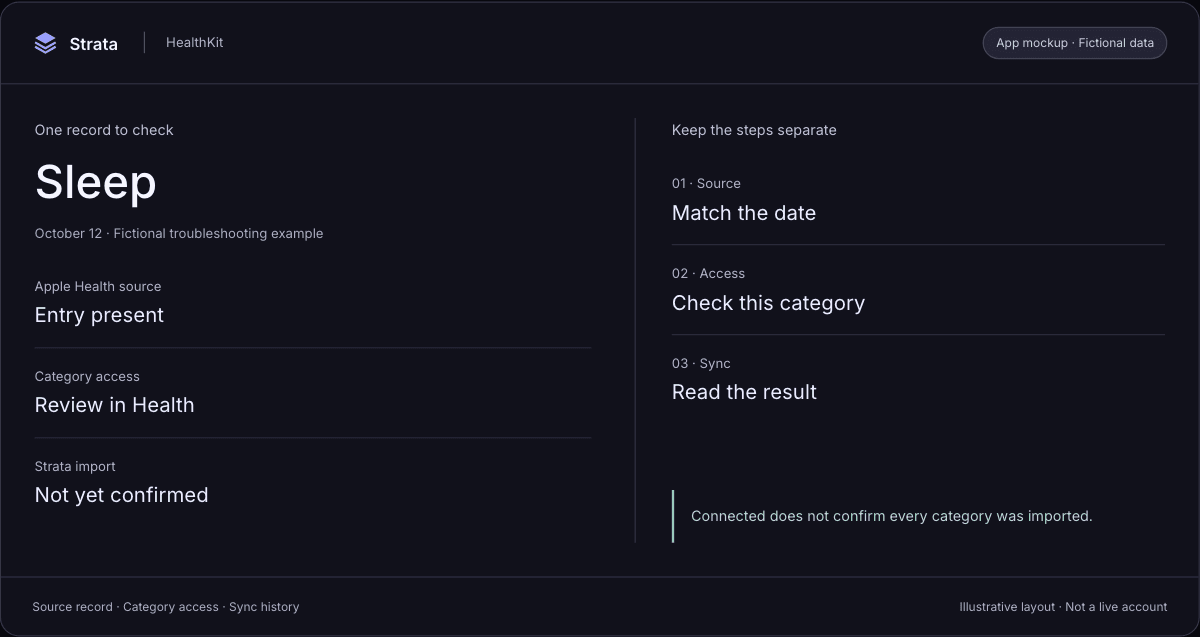
Check the source record, category access, and sync history before trying a historical backfill on iPhone.
5 min read
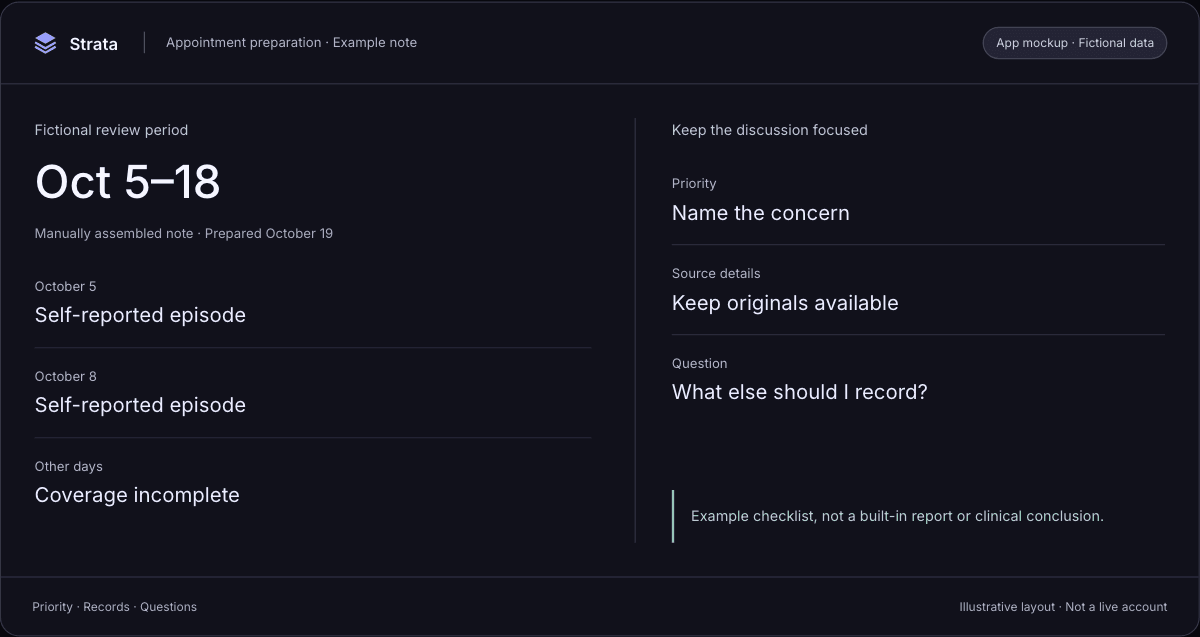
Turn relevant Strata records into a short appointment note with priorities, dates, source details and unanswered questions, while keeping original records available.
Keep the details you want to remember.
2 min read
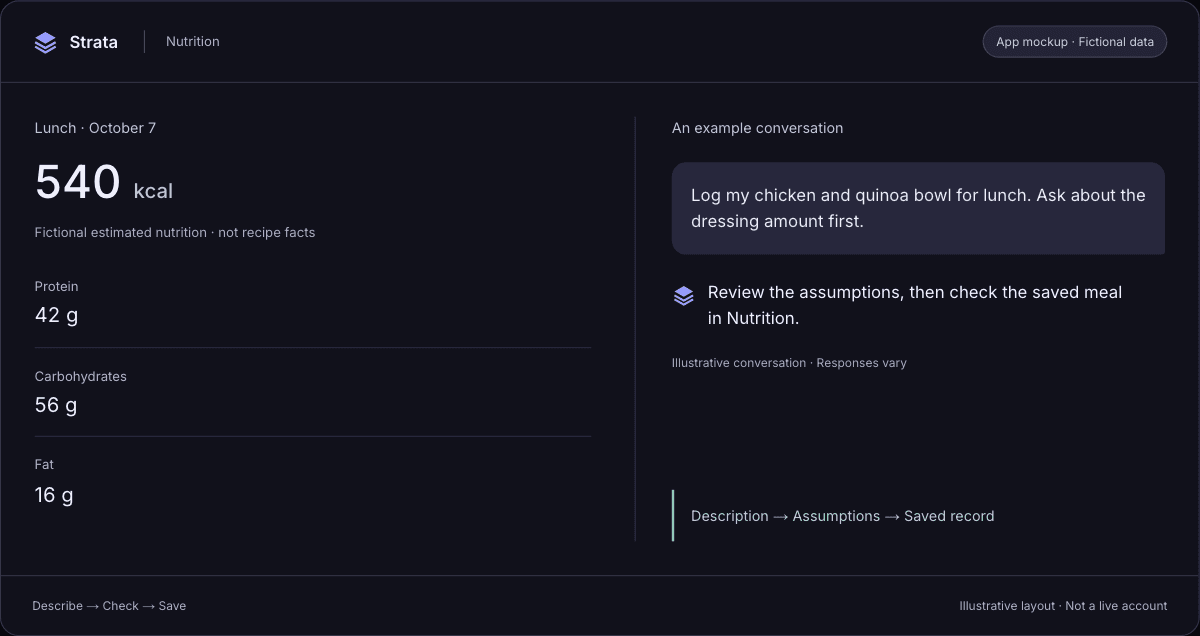
Give a connected assistant enough detail to create a nutrition entry you can inspect and correct.
3 min read
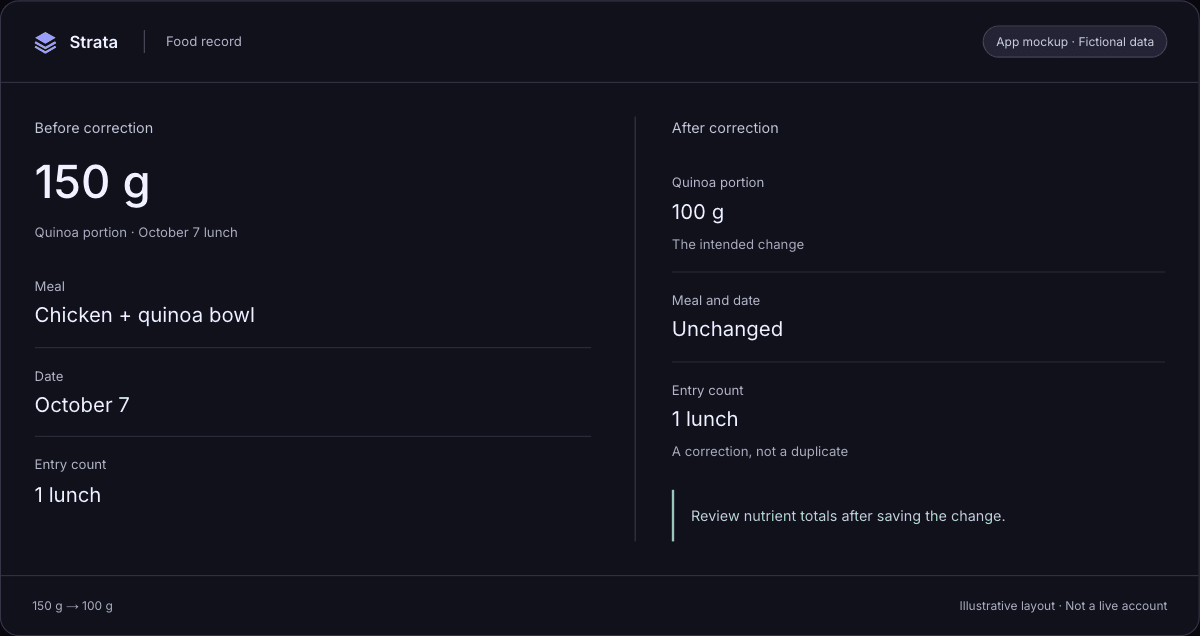
Find the right entry, correct the detail that changed, and check the updated daily totals.
3 min read
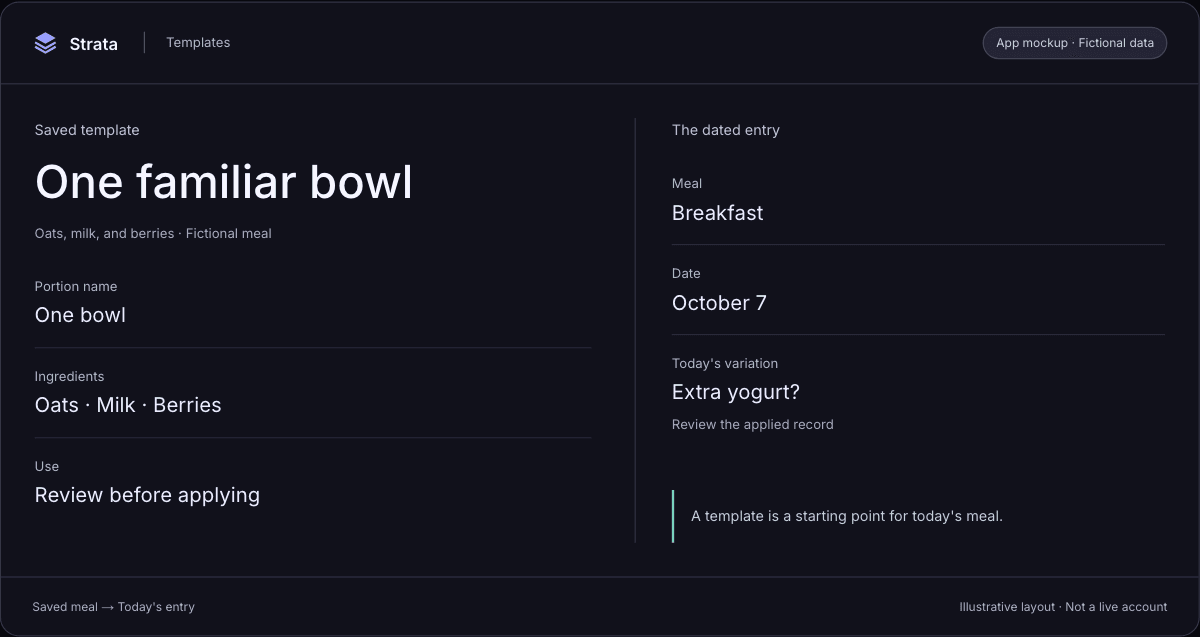
Use a saved meal template as a starting point, with portions that still match what you eat.
2 min read
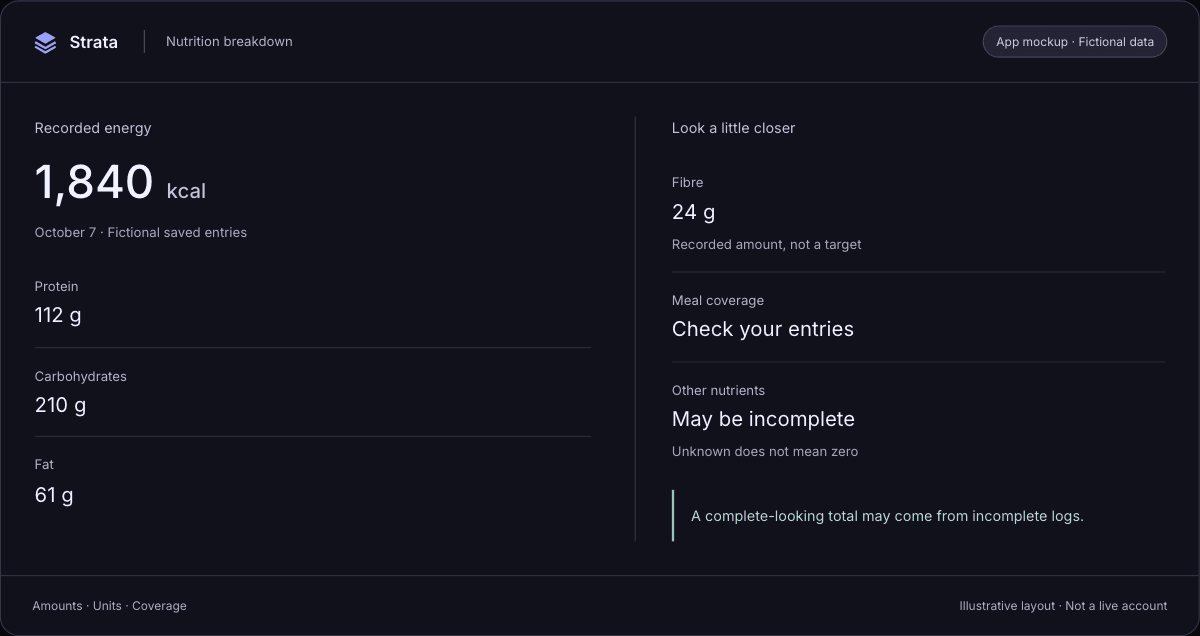
Read the nutrients recorded in a day and distinguish a complete log from an incomplete breakdown.
2 min read
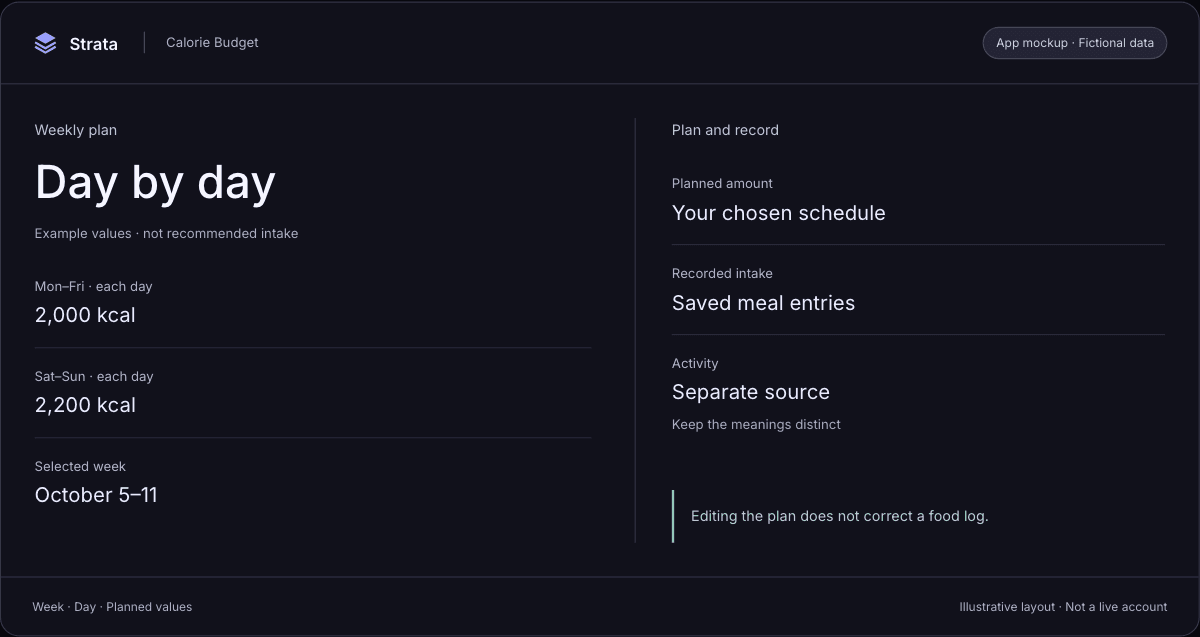
Understand Strata's day-by-day budget view and keep planned amounts separate from recorded intake.
2 min read
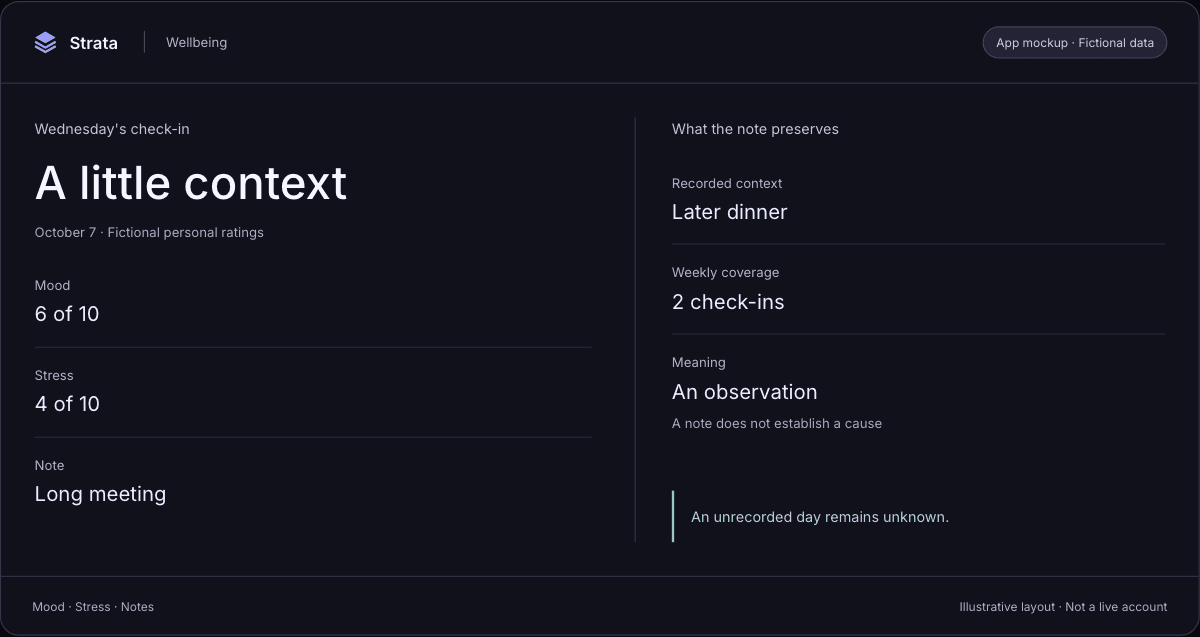
Keep mood, stress, and short notes alongside the physical records you review.
2 min read
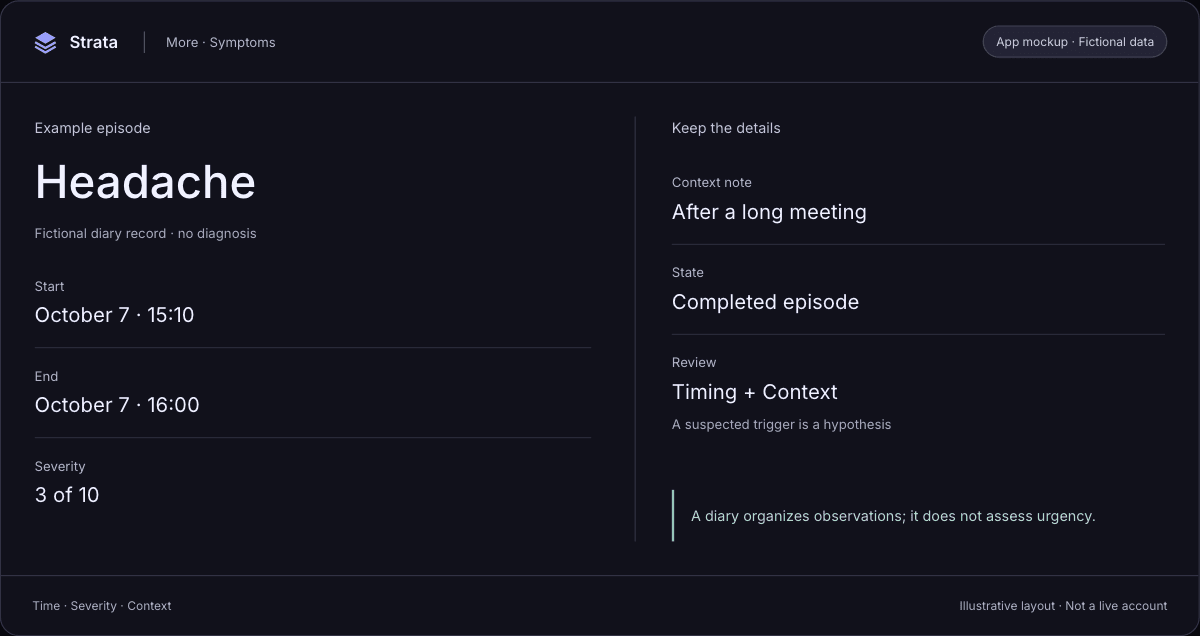
Record an episode's timing, severity, and context in a history you can review later.
2 min read
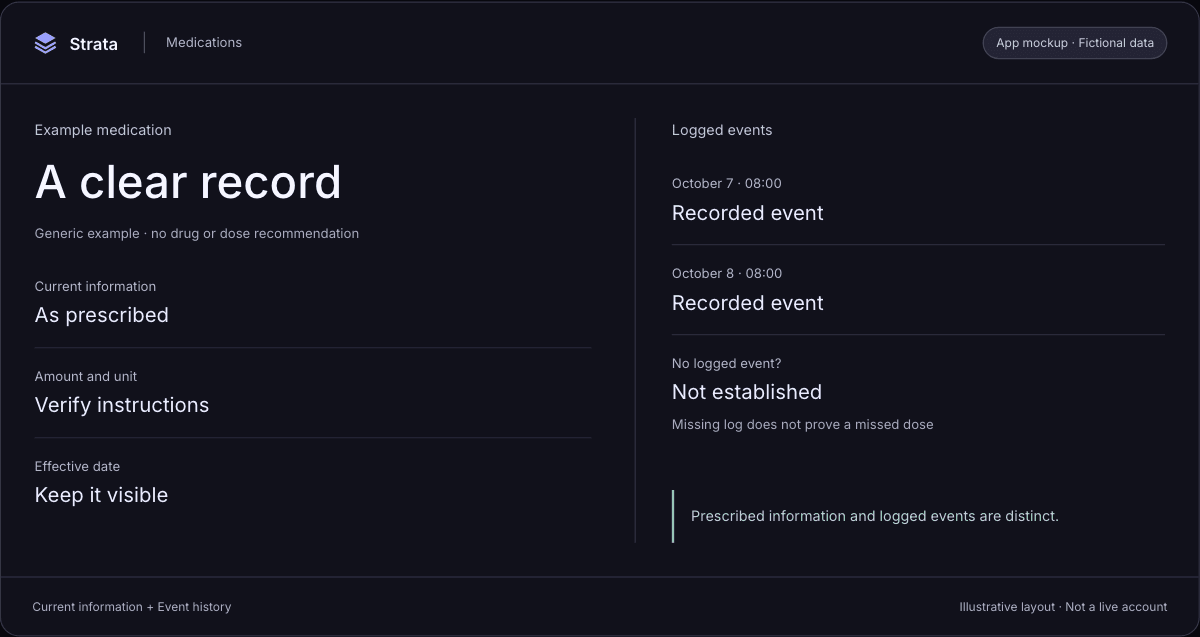
Distinguish a medication's recorded dose information from the history of logged doses.
3 min read
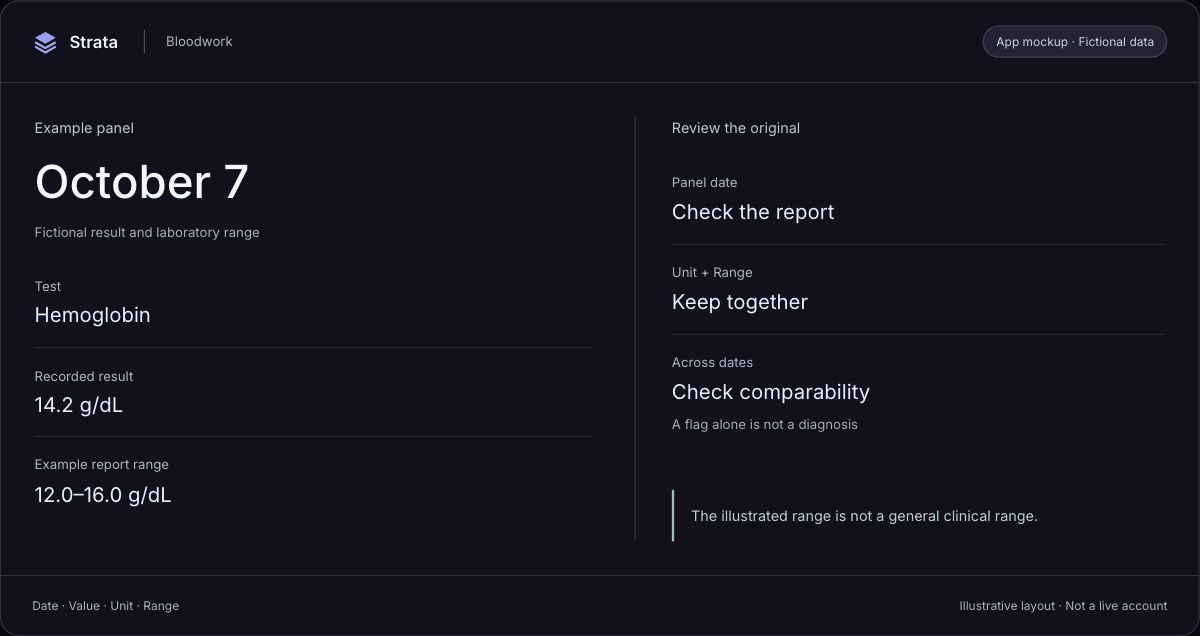
Organize panels by date and inspect a test's result, unit, and original reference range together.
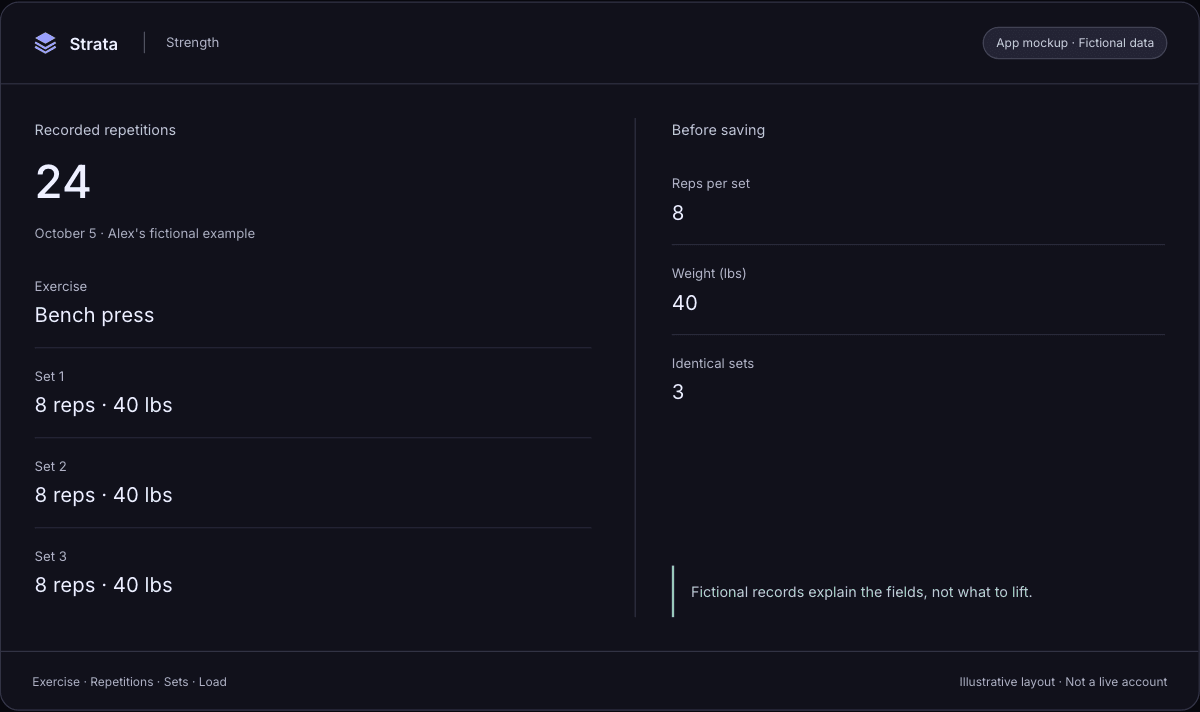
4 min read
Keep the exercise, repetitions, set count, and recorded load clear when you log strength activity in Strata.
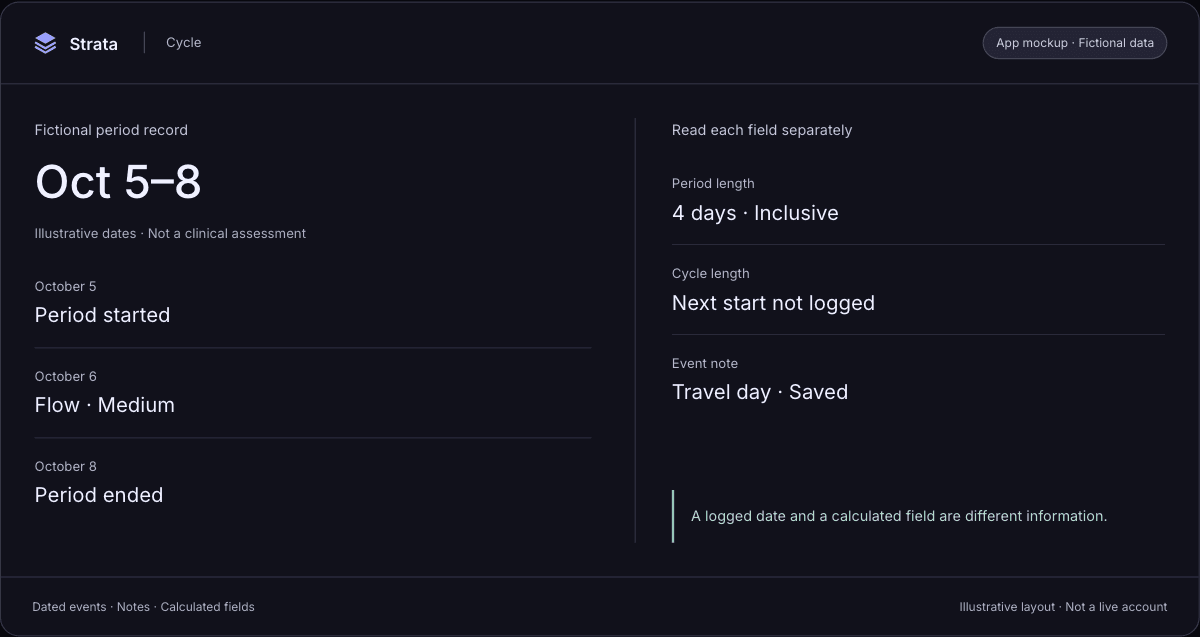
5 min read
Record cycle events, add notes to the right date, and move between the list and calendar without confusing entries with estimates.
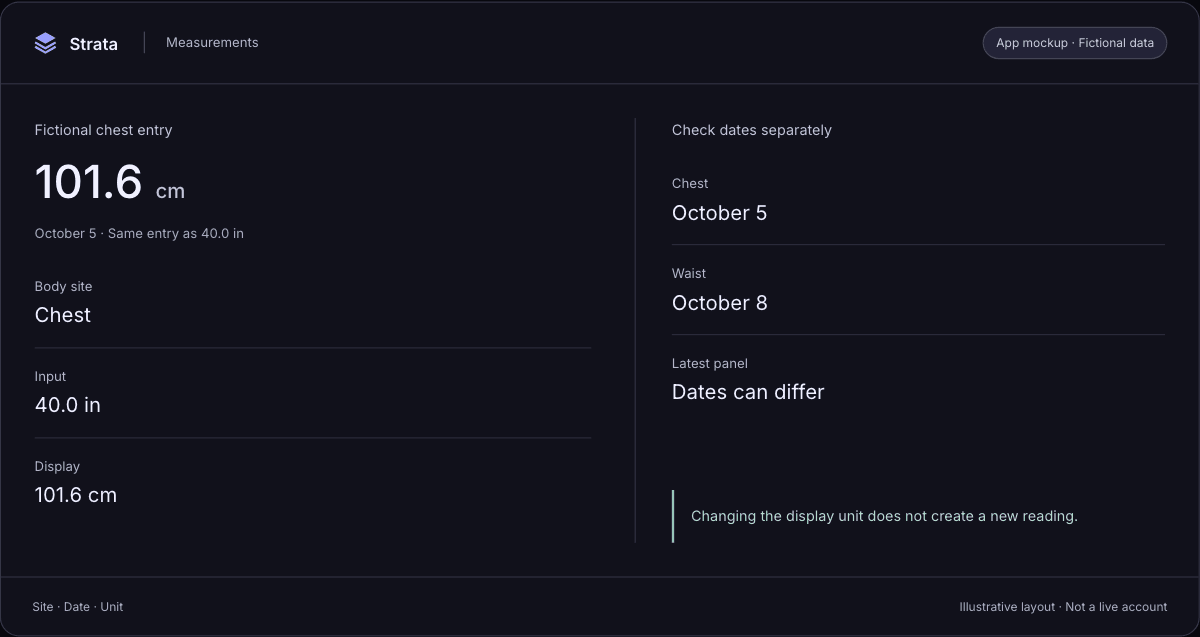
5 min read
Record body measurements by site and date, check centimetres versus inches, and understand the Latest, Trend and History views in Strata.
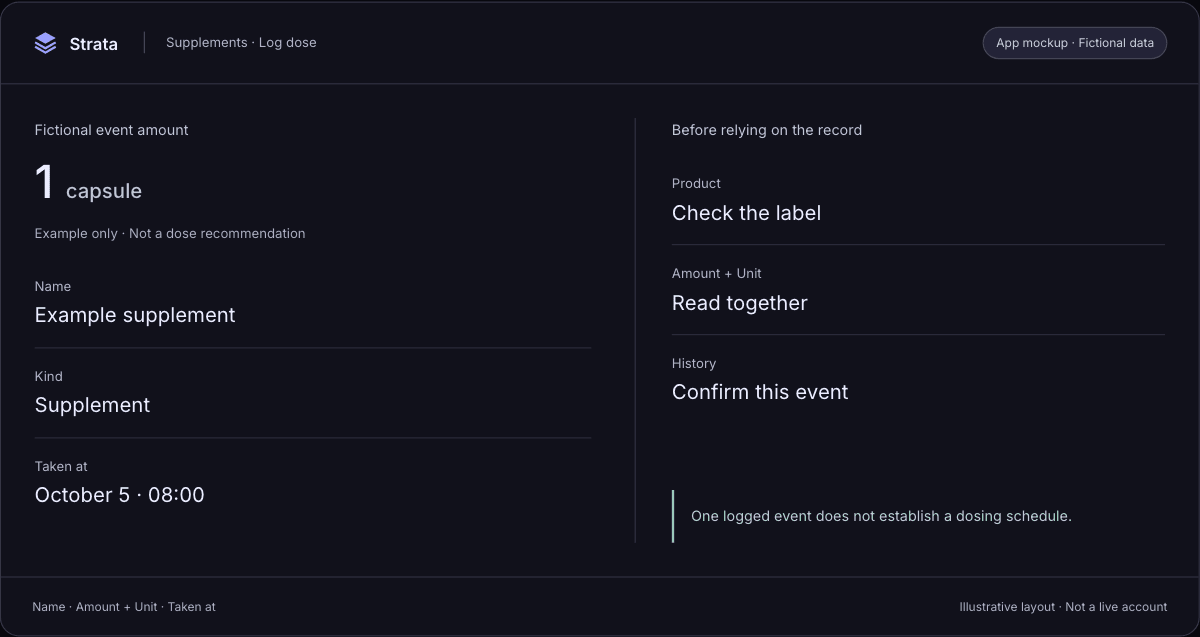
5 min read
Save a supplement event with a recognizable product name, amount, unit and actual time, then check the entry without confusing a log with a schedule.
5 min read
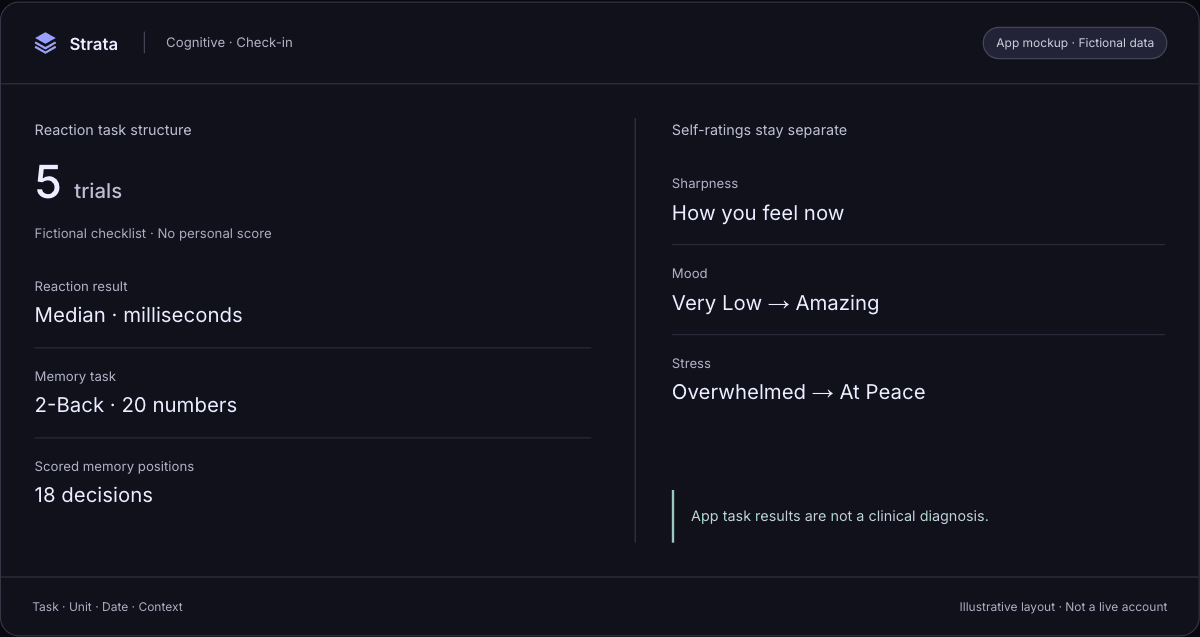
Follow Strata's web reaction and memory tasks, read the rating labels, and verify the dated record without turning task results into a diagnosis.
7 min read
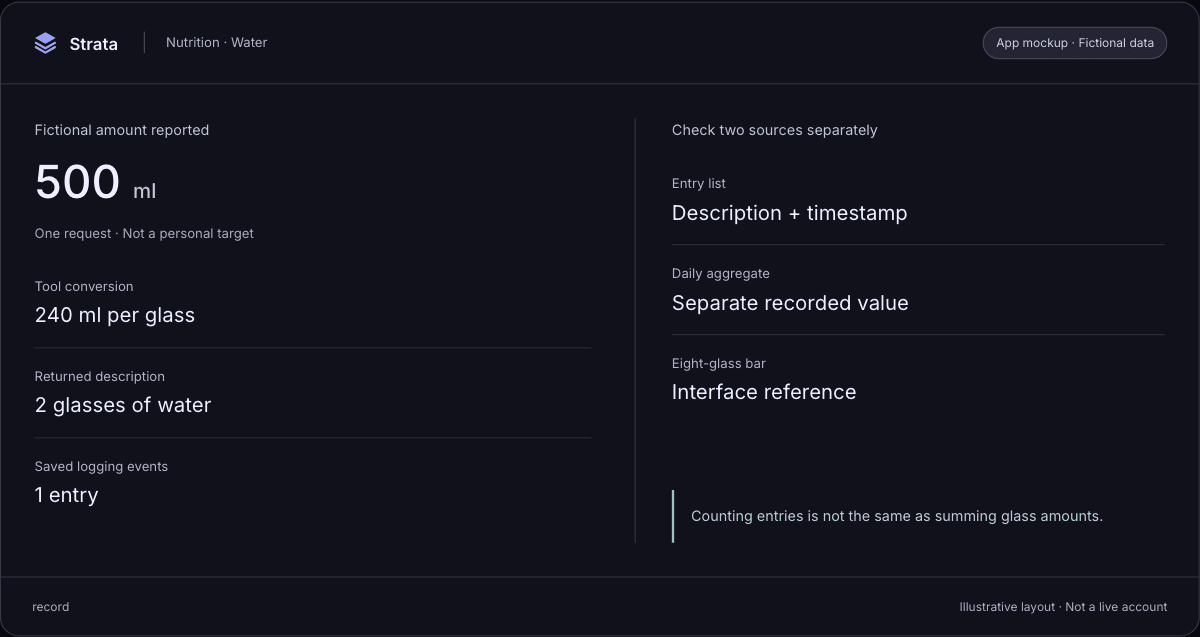
Record an explicit water amount, understand rounded glass descriptions, and check entries separately from daily totals.
7 min read
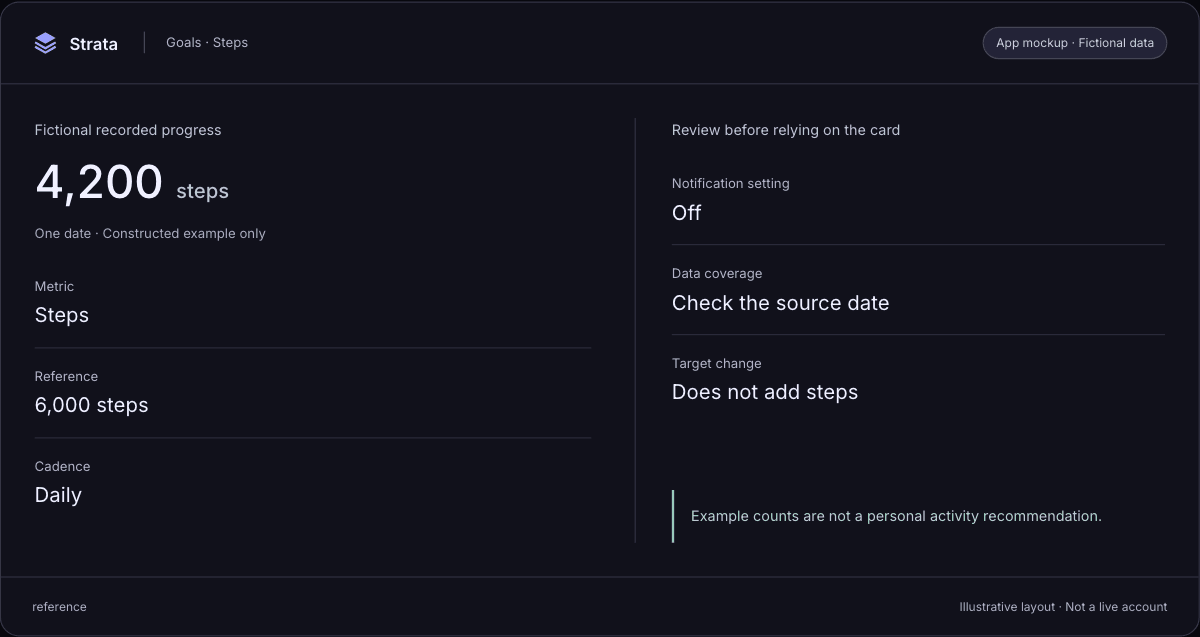
Set a step reference, inspect what the card counts, and keep missing records separate from a confirmed zero.
4 min read
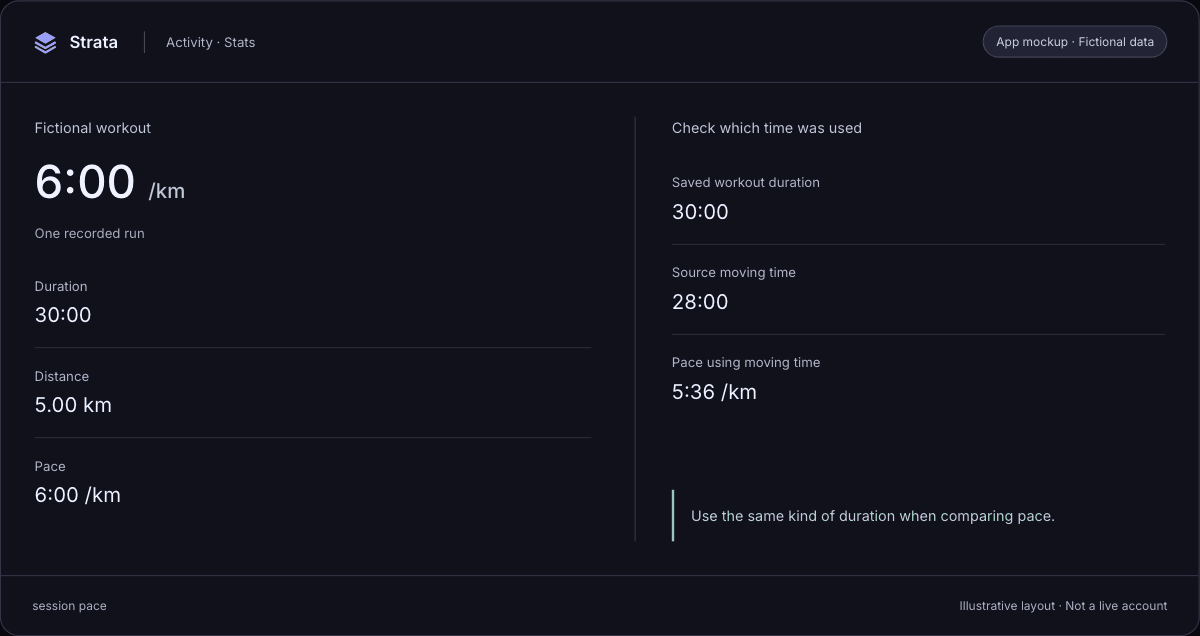
Open a session from Activity Log and check which values went into its pace.
4 min read
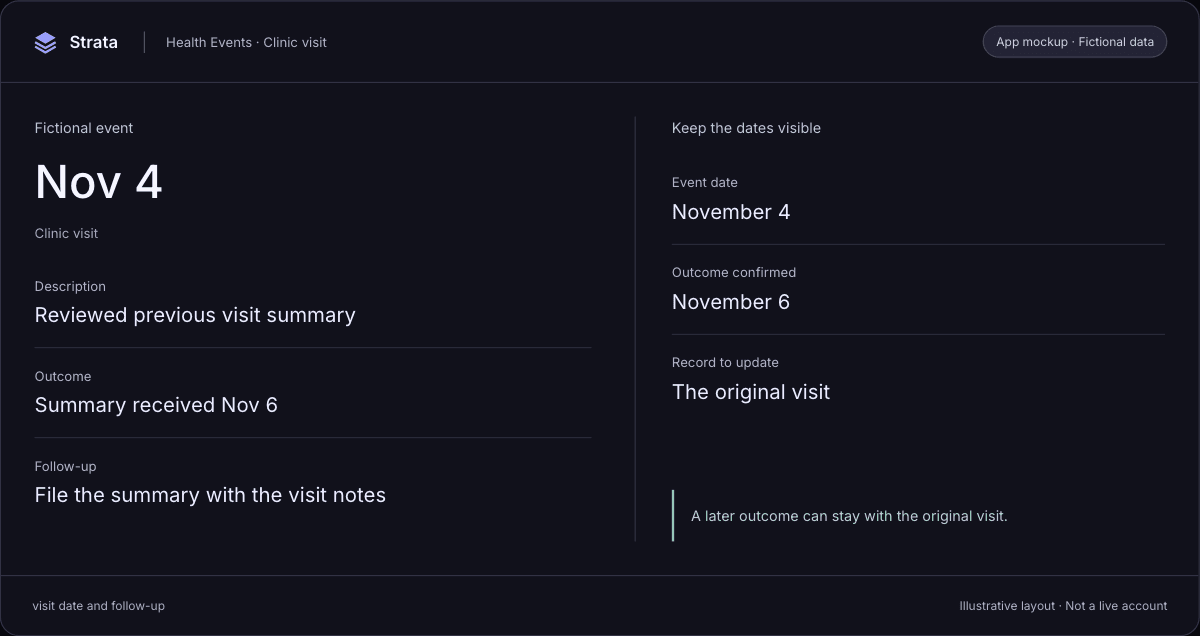
Save the date, what happened, and what you want to revisit after a visit.
4 min read
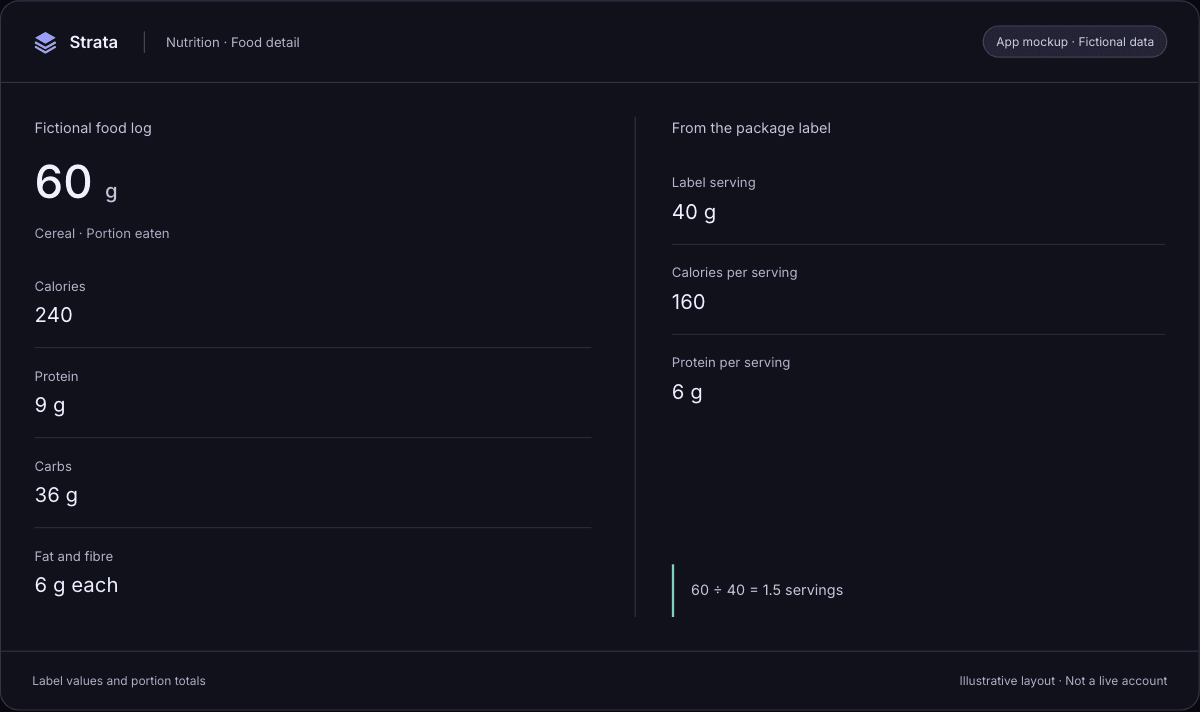
Turn the numbers per serving into a food log entry for the portion you ate.
4 min read
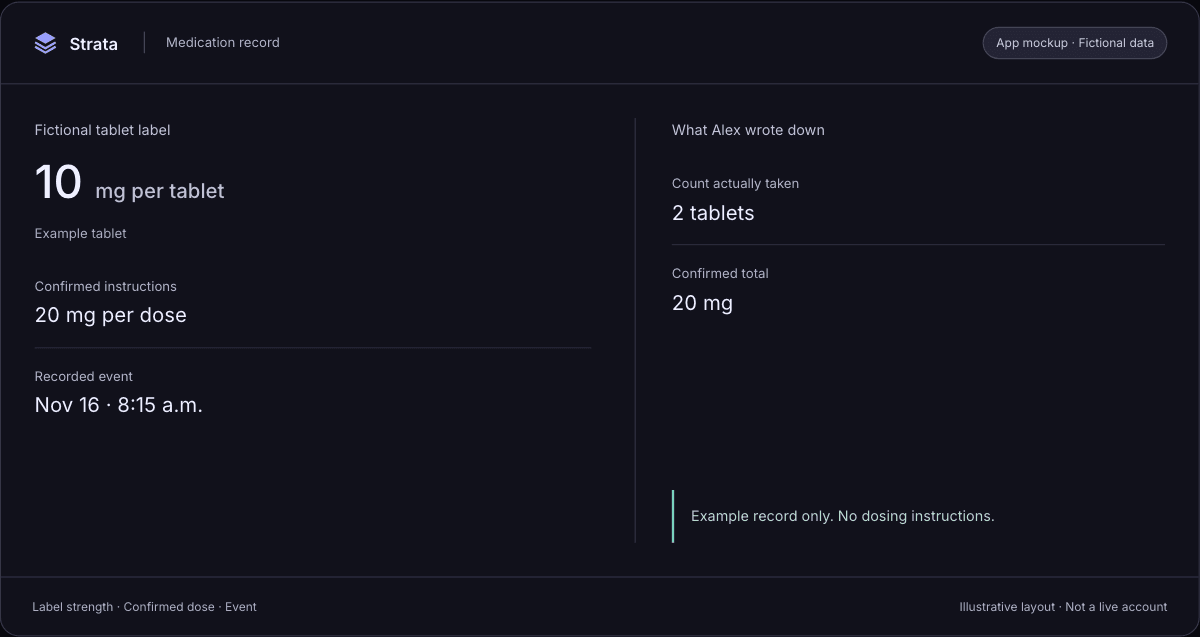
Keep the strength per tablet, the number you took, and the confirmed dose separate in your medication record.
4 min read
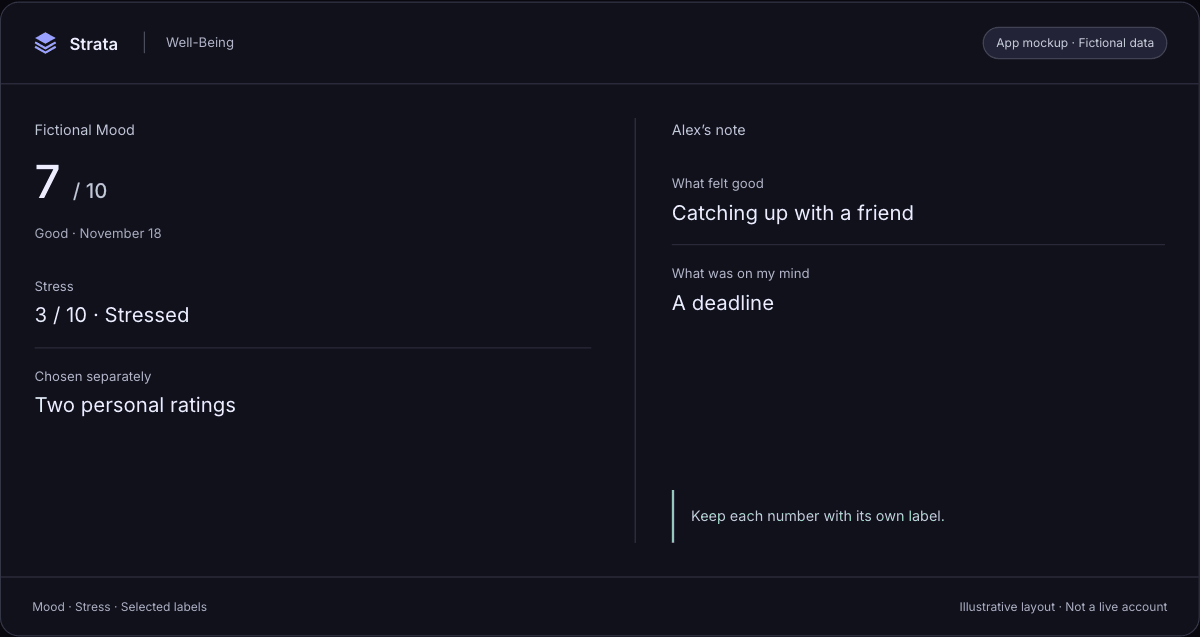
Use the label beside your Stress rating to understand which direction the score runs.
6 min read
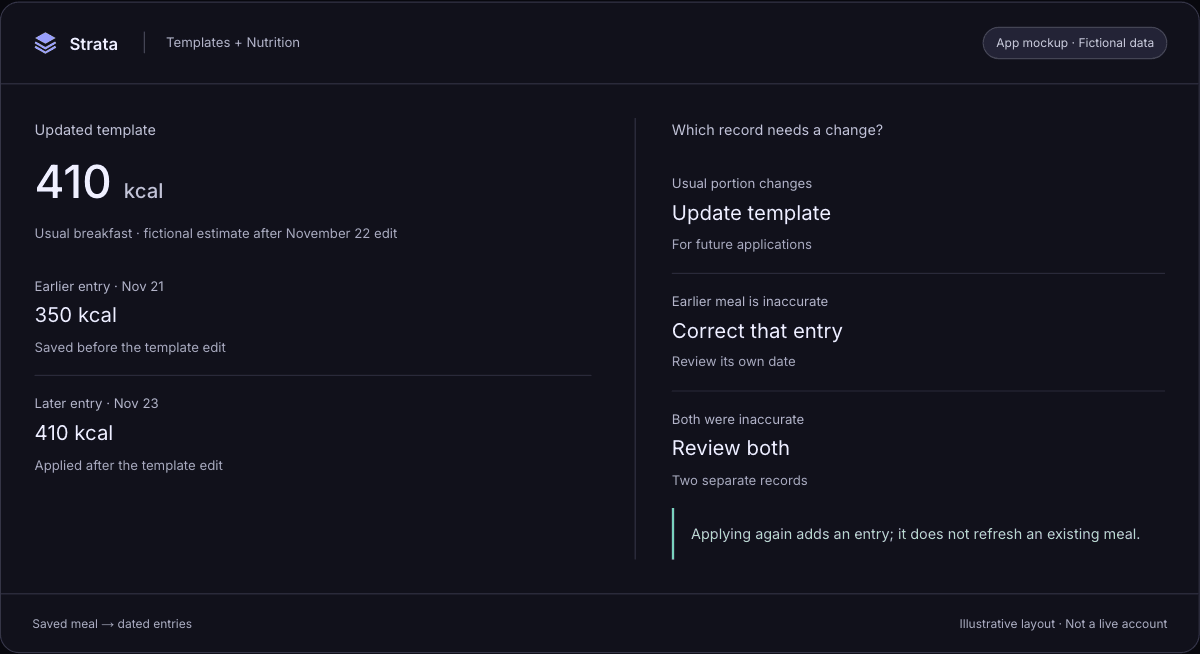
Understand which record changes when you update a saved meal, and how to correct an older entry without adding a duplicate.
6 min read
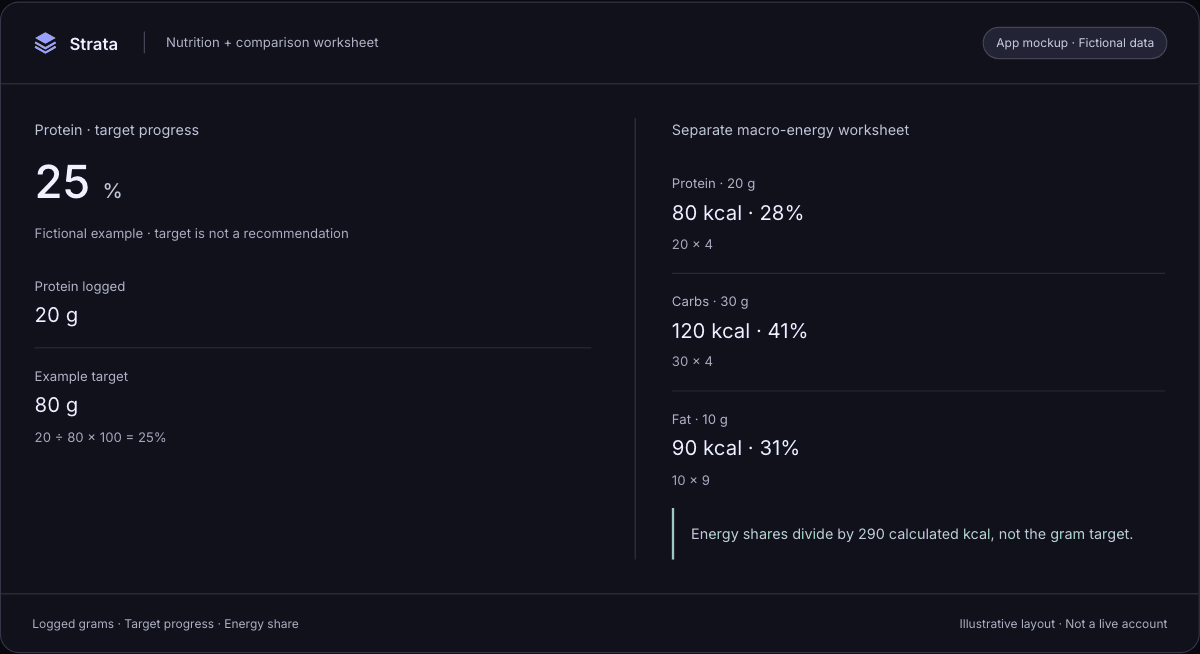
Read the amount beside a percentage to distinguish gram-target progress, macro energy shares and a package label's Daily Value.
Follow the evidence behind the overview.
2 min read
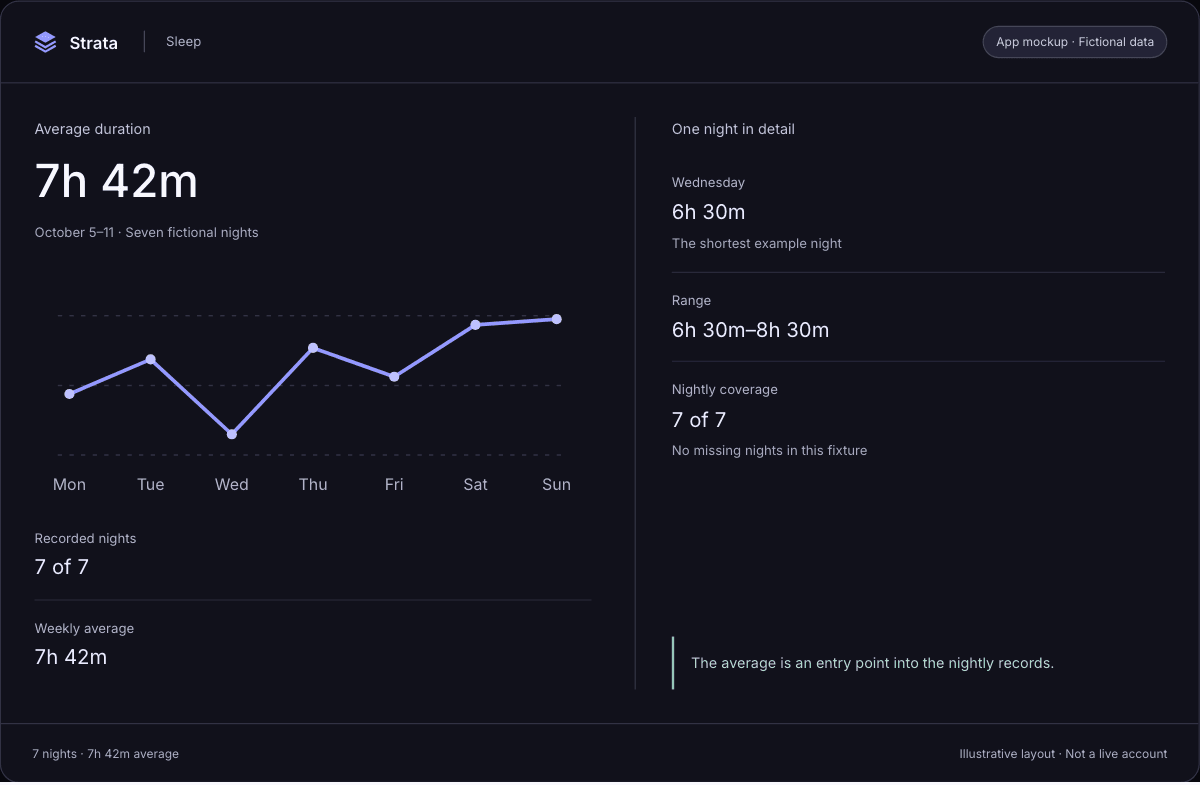
Read the nightly records behind a weekly average and notice gaps before interpreting a change.
3 min read
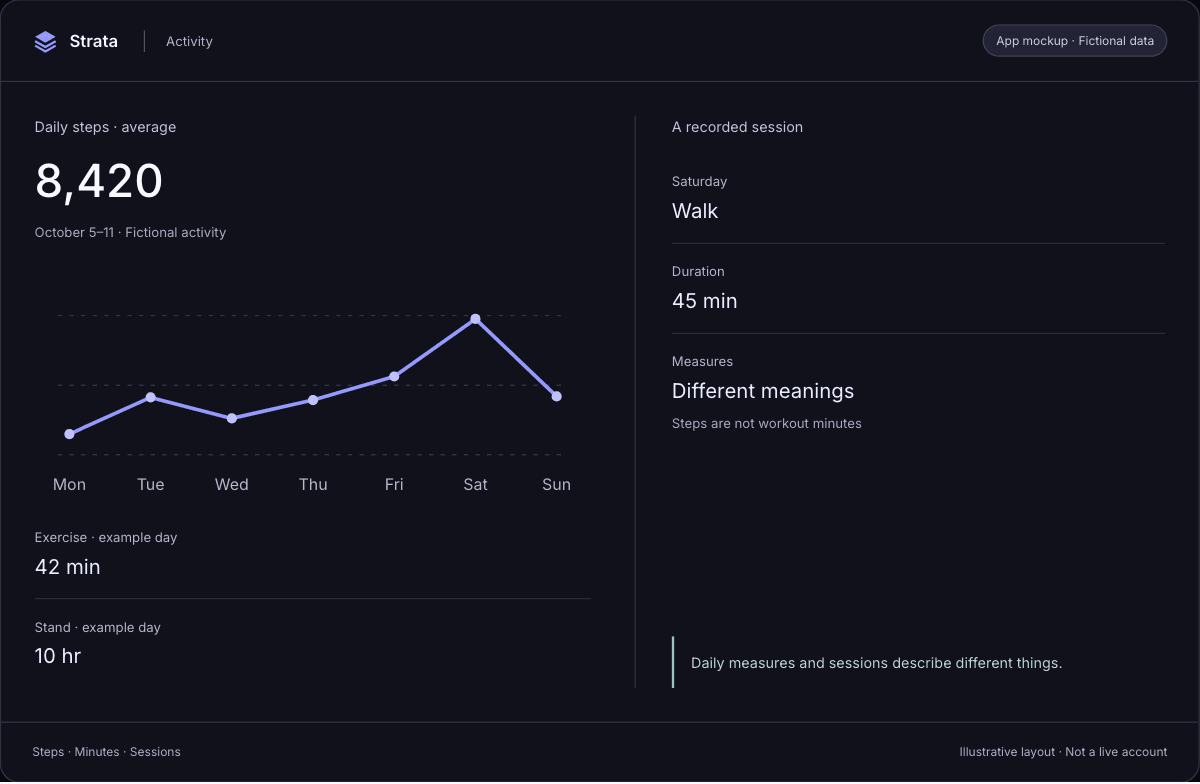
Review steps, exercise minutes, and workout records as different views of activity.
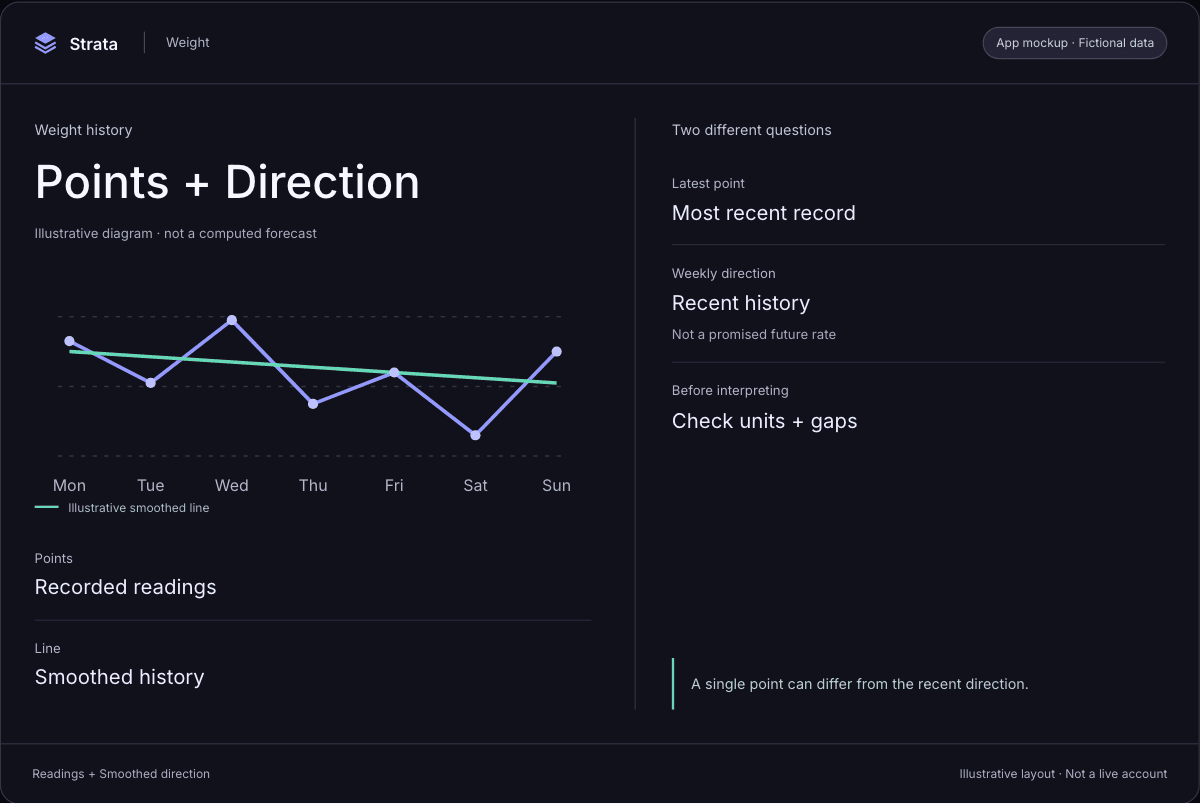
2 min read
Understand individual weight readings and Strata's smoothed weekly direction measure.
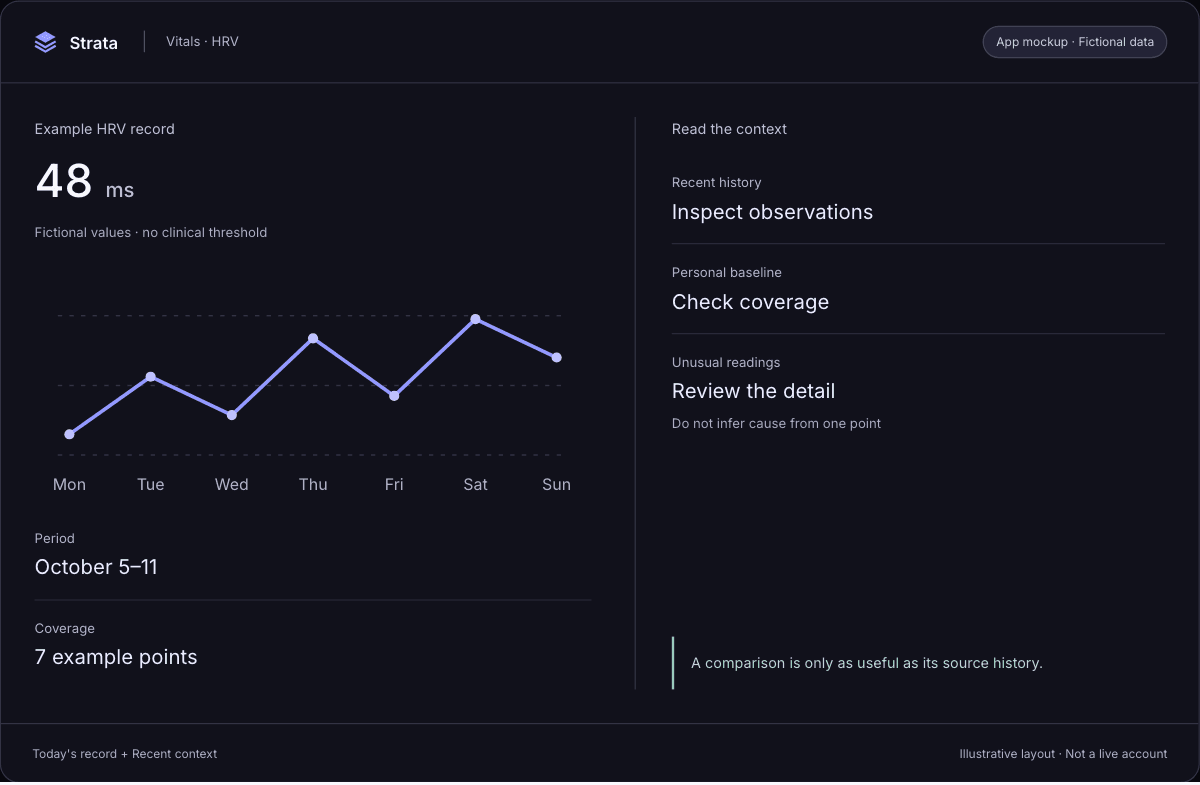
2 min read
Use Strata's vitals detail to inspect recorded HRV and the context behind a baseline comparison.
2 min read
Read an insight with its observations, coverage, and uncertainty before assigning a cause.
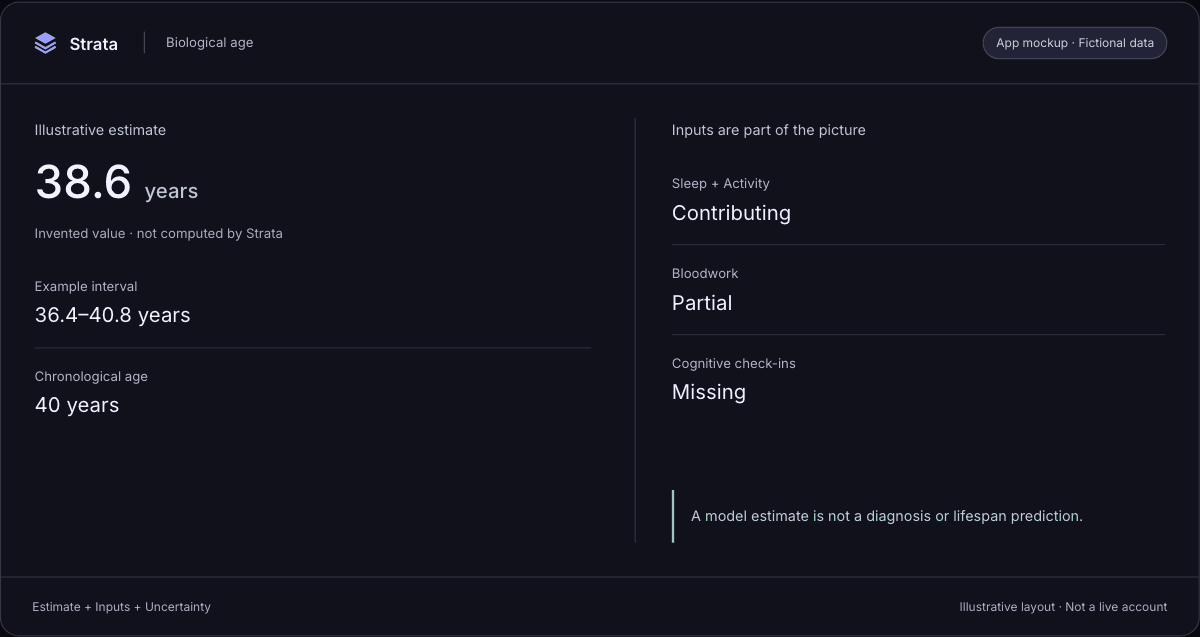
3 min read
Explore the component inputs, completeness, and model uncertainty behind Strata's directional estimate.
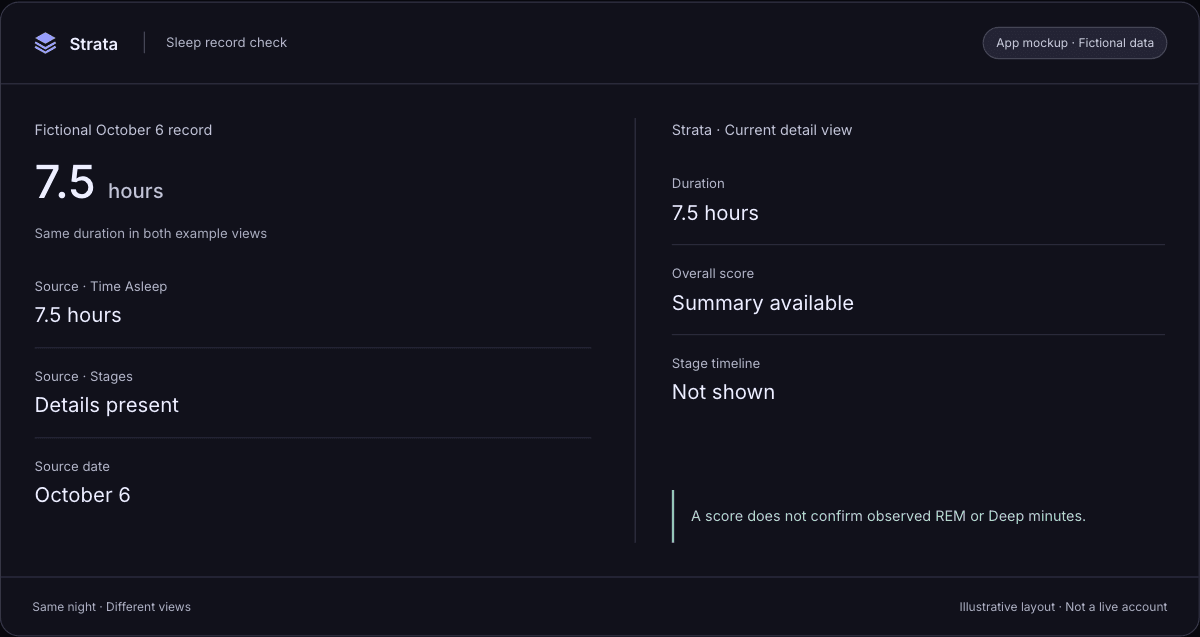
5 min read
Check whether stage details are missing at the source or simply absent from Strata's sleep view, and keep sleep scores separate from recorded stages.
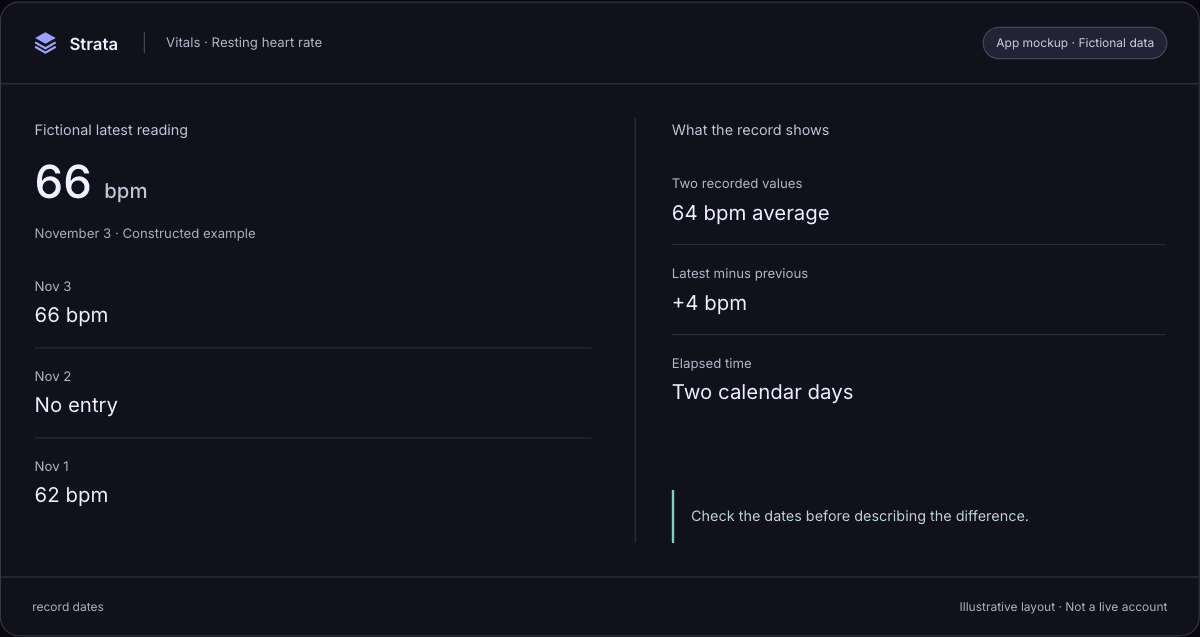
4 min read
Find the dates behind your resting heart rate chart, especially when a day is missing.
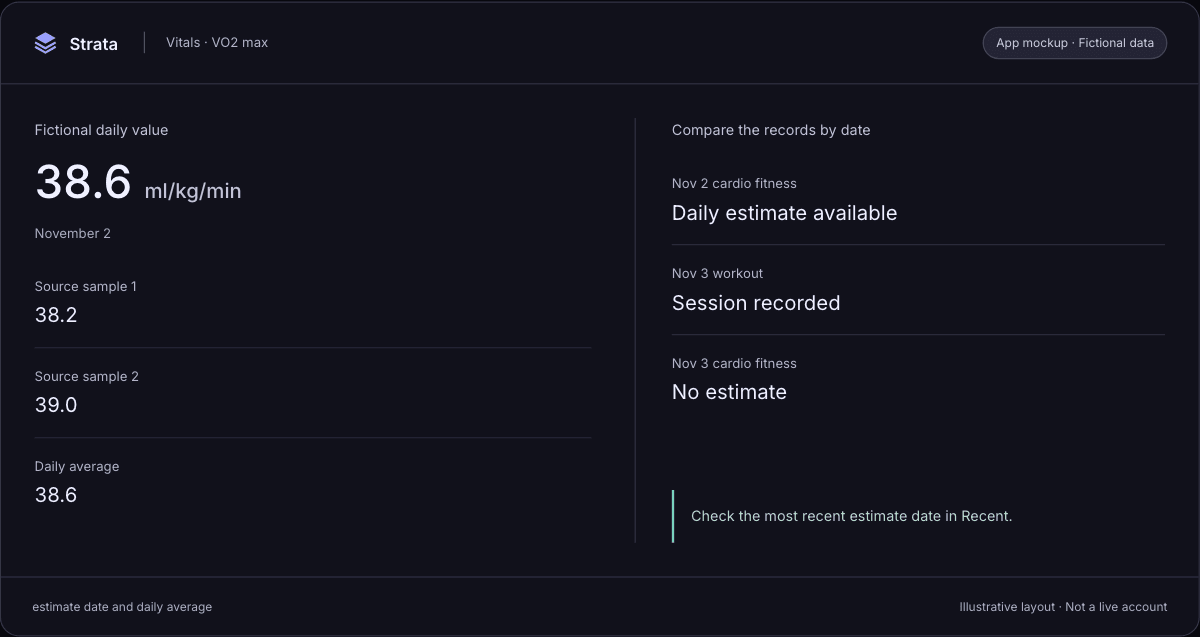
4 min read
Find the dated VO₂ max estimate behind the chart and check what came from Apple Health.
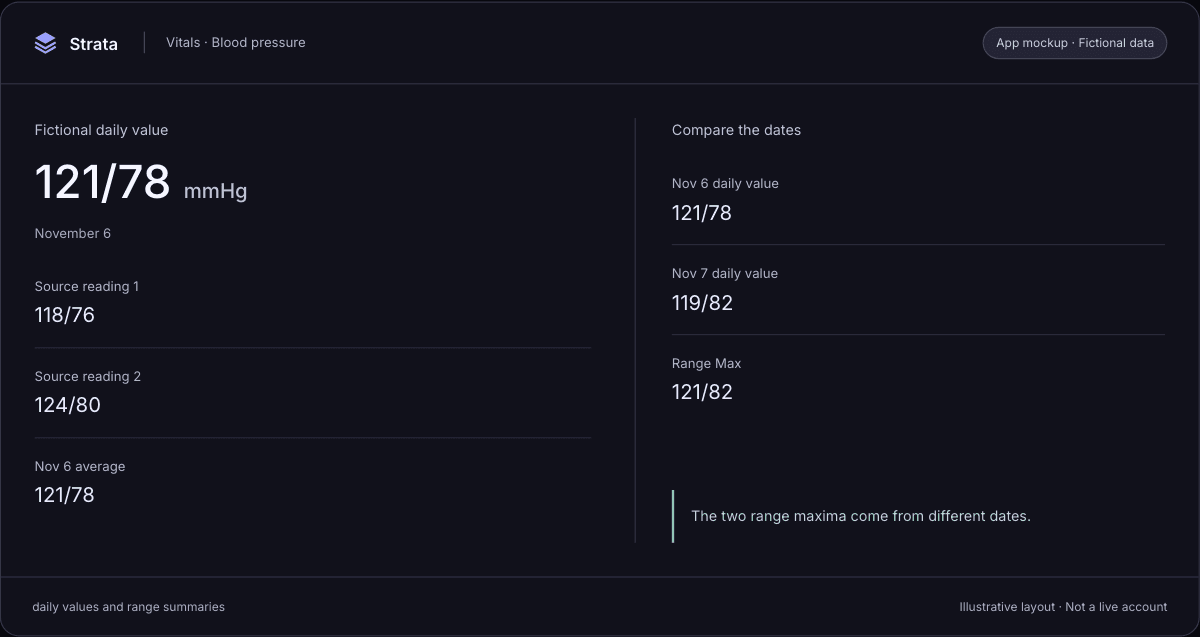
4 min read
Match the two chart lines by date and trace a daily value back to its source readings.
4 min read
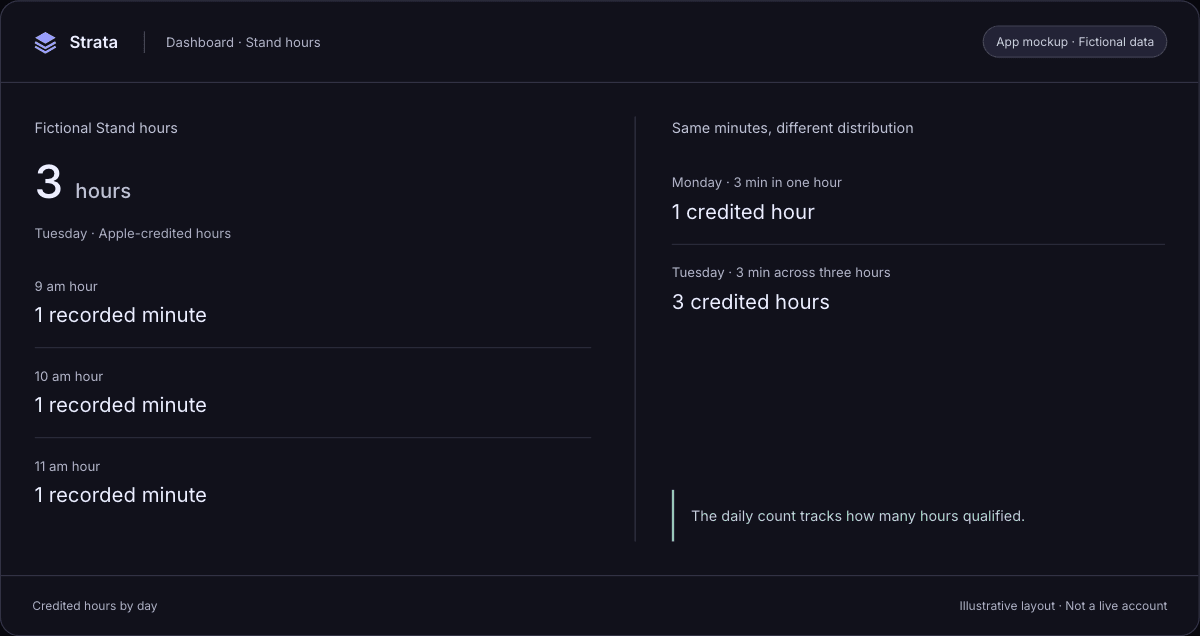
Find the Stand hours card and compare its daily count with Apple Fitness.
3 min read
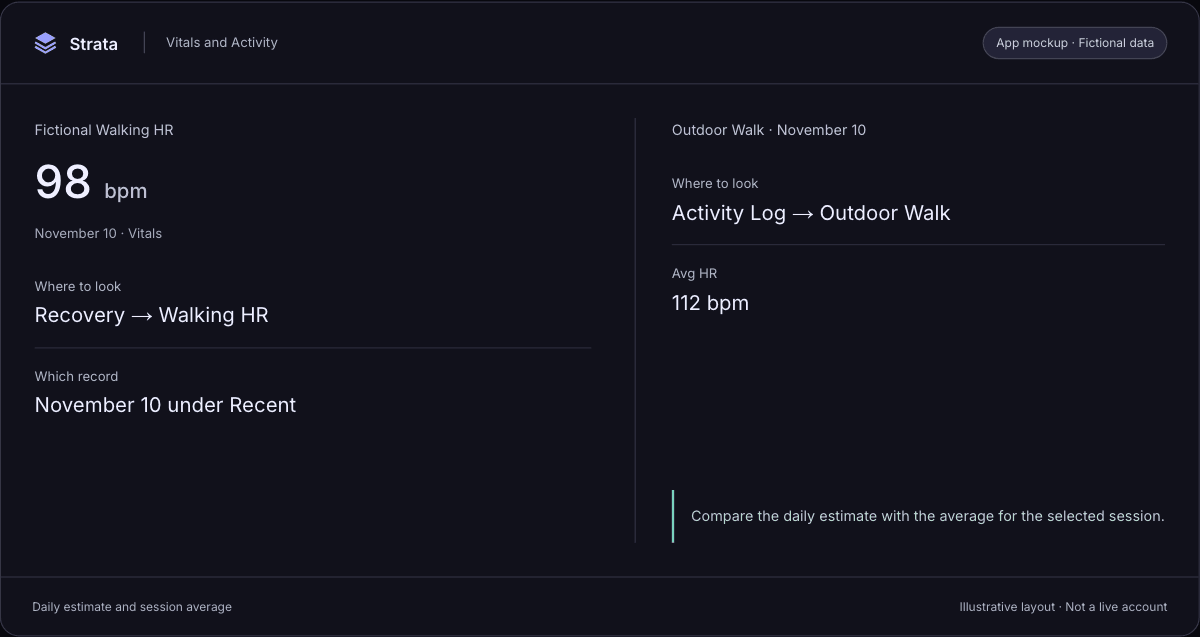
Find the daily walking estimate and the heart rate average for one recorded workout.
3 min read
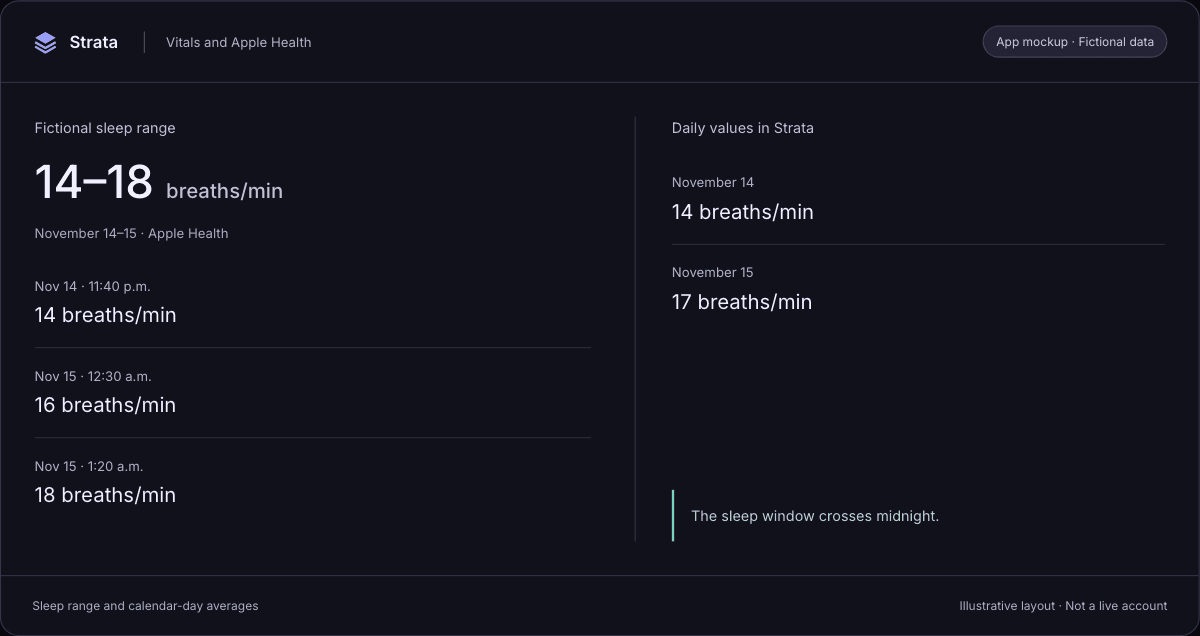
Compare the range for a night’s sleep with the dated average in Strata.
4 min read
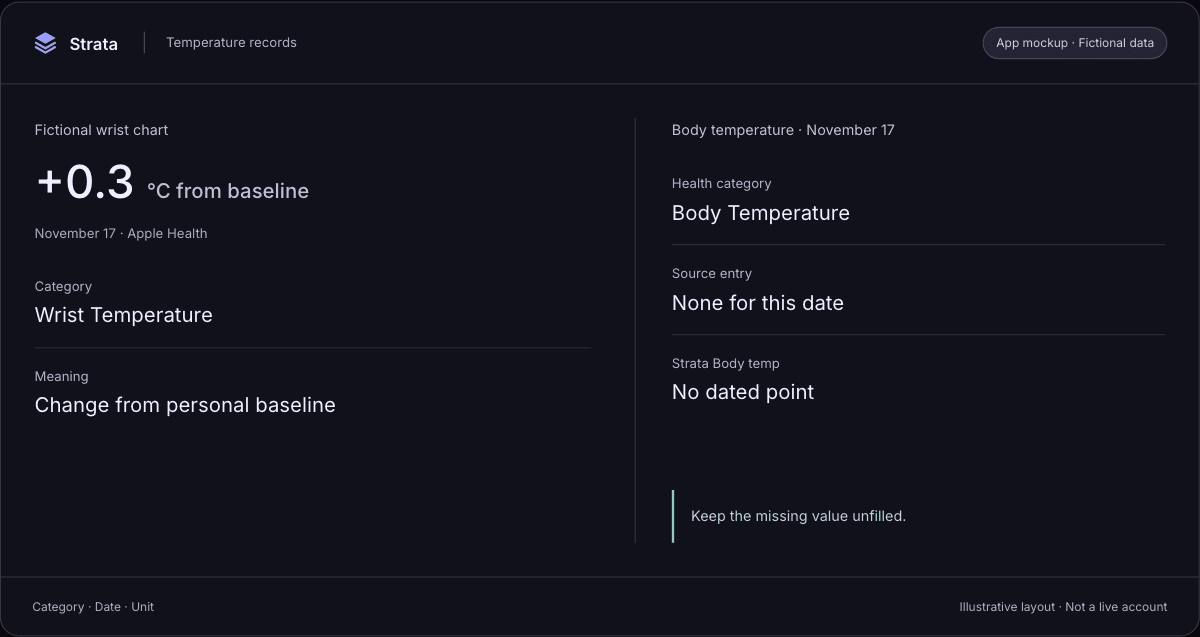
Check the temperature category before troubleshooting a blank Body temp value in Strata.
4 min read
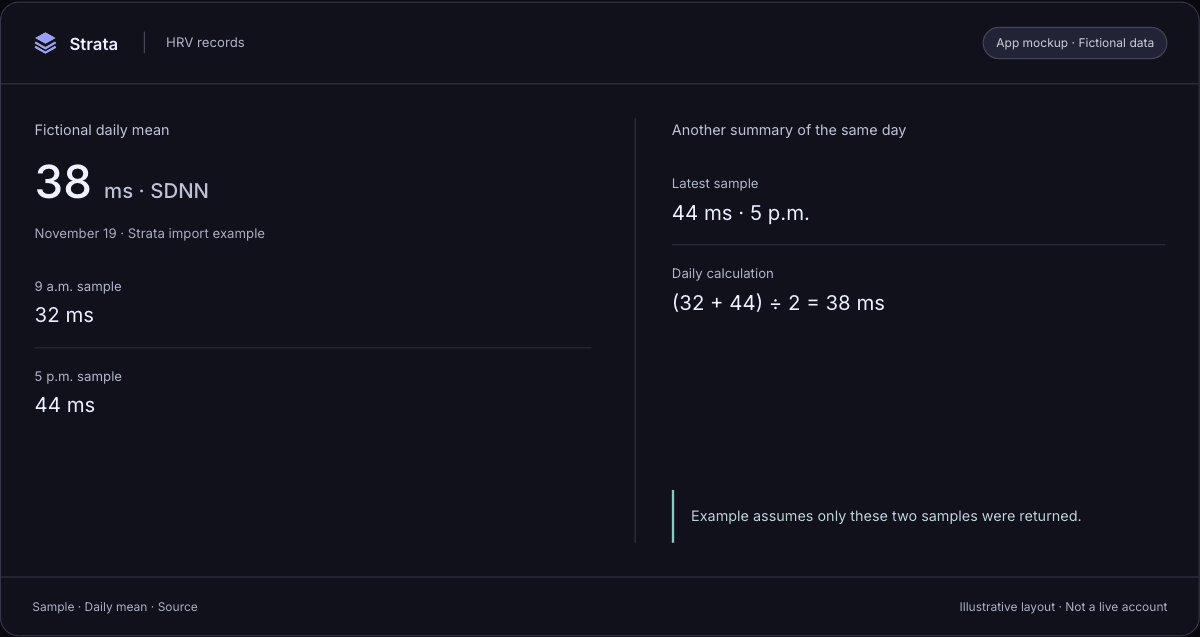
Check the HRV metric, unit, time window and source before comparing Strata with another app.
6 min read
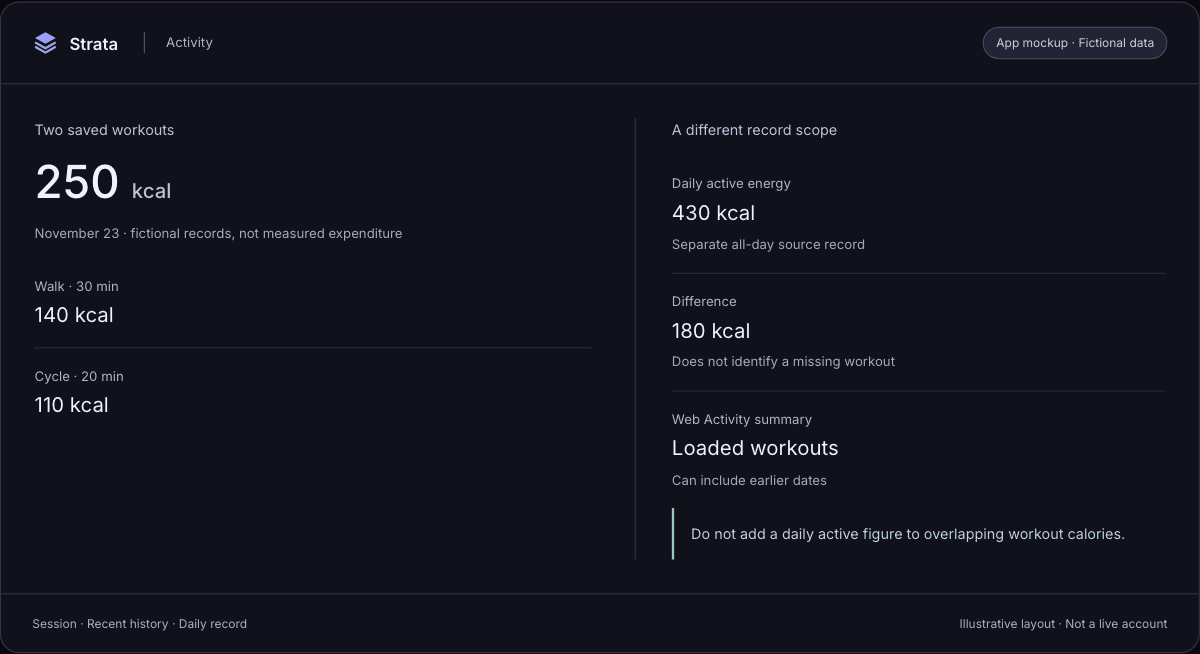
Compare one workout, the Activity summary and an all-day energy figure using the same dates and calorie definition.
6 min read
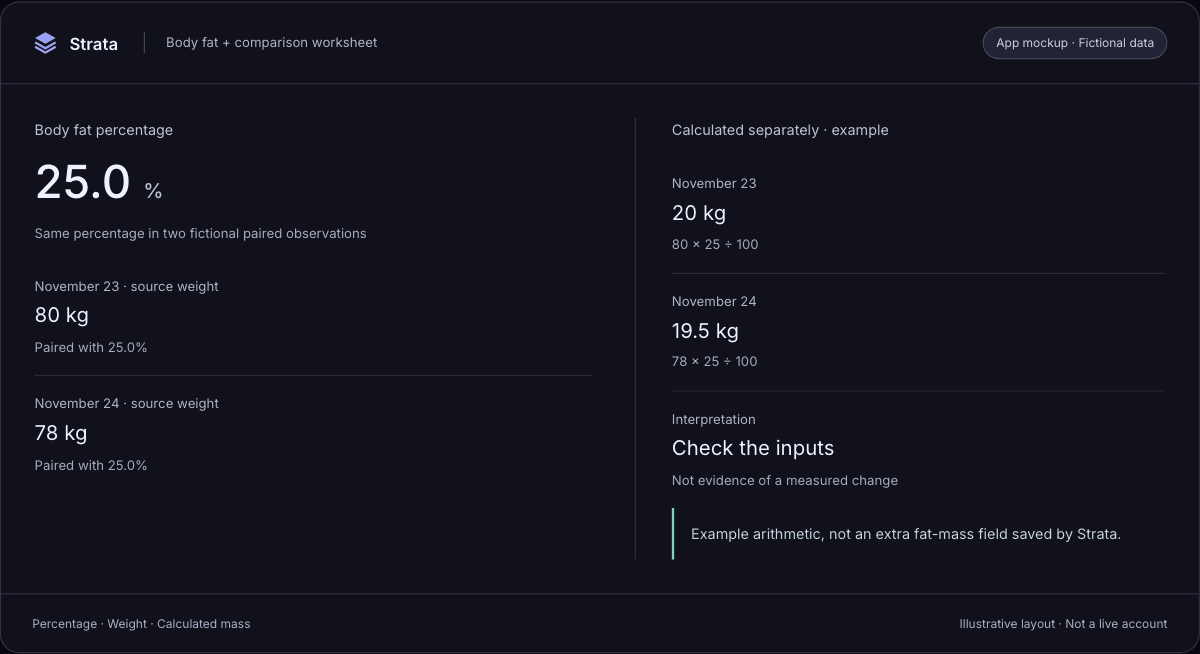
Read Strata's body fat percentage and compare it with a scale app's fat-mass value using matched dates and units.
6 min read
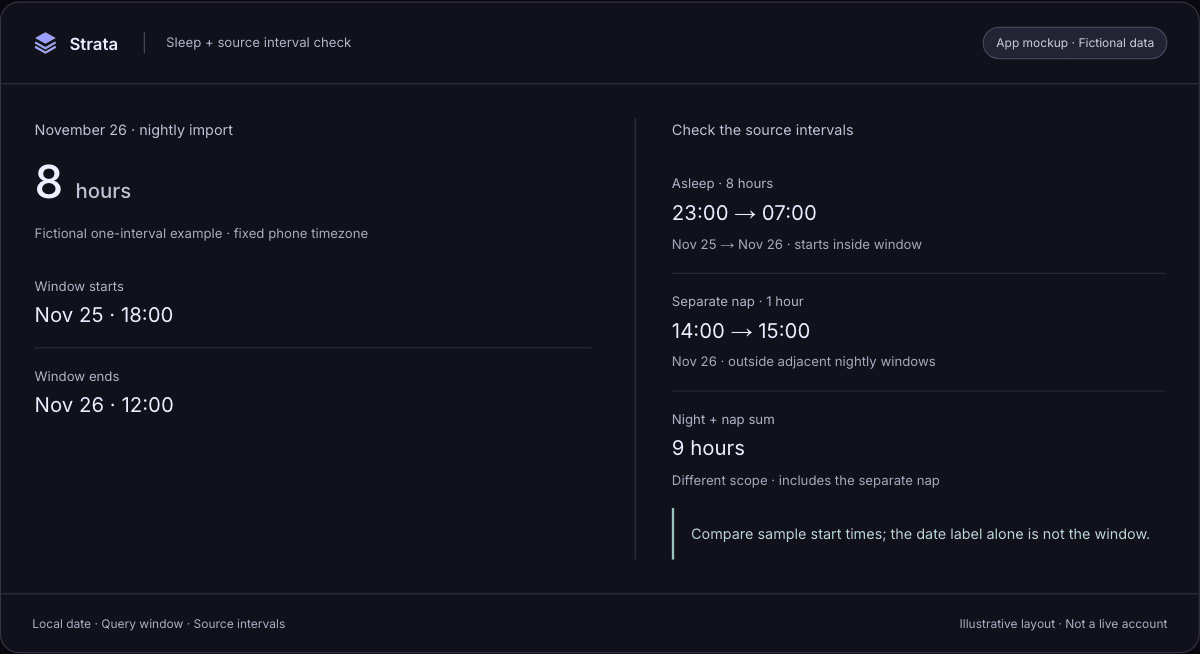
Check the evening-to-noon import window before comparing a dated night with an afternoon nap or a full-day sleep total.
Put it into practice